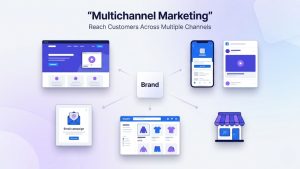
Customers are no longer following a single, foreseeable path before buying. They find products on social sites, compare alternatives on marketplaces, engage with brands in applications or on the web, and demand that context be carried from one interaction to another.
For businesses, this has transformed disconnected tools and siloed data from inefficient to expensive. This issue can be addressed by omnichannel marketing platforms that combine customer data, communication channels, and operational systems into a single, integrated experience.
Rather than running campaigns, support, and commerce independently, teams can work with a shared customer perspective, which enables them to personalize, respond more quickly, and make better decisions at each touchpoint.
This guide disaggregates the best omnichannel marketing tools and platforms, how they can be integrated into an up-to-date stack, and the solutions that work best for various business models, including DTC brands and SaaS companies, enterprise retailers, and marketplace operators.
What is an Omnichannel Platform?
An omnichannel platform is a combined technology platform that integrates customer data, marketing activities, sales activities, and support activities by means of all channels, both physical and digital, and then ties them together into one system.
It ensures that all customer touchpoints with your brand are in the same context, history, and data in real time. The word is abused extensively. The number of vendors who use a single-channel tool and attach an omnichannel badge to it just because it can be integrated with one extra channel is high.
There are three distinct activities of an authentic omnichannel platform: it gathers data across all channels, consolidates it into a single customer record, and uses that record to provide a personalized experience across all channels simultaneously.
Imagine it as a phone where you could make calls, send texts, and check email separately, and the phone where all three have access to your contacts, your past, and your likes and dislikes. The hardware is identical. The situation is quite different.
How the Right Omnichannel Stack Is Architected?
It is important to know what architecture you are going to build before examining individual platforms. The most powerful omnichannel stacks are based on a five-layer paradigm – and any tool that you are considering adopting should fit into one of these layers.
Each tool discussed in this guide is associated with one or more of these layers. It is not about discovering a single platform that can do it all, but about identifying the appropriate tools for each layer that work together. It is that integration that makes the difference between a real omnichannel stack and an expensive set of disconnected subscriptions.
Platform Categories Explained
The omnichannel platforms and tools market is divided into six segments. Having a clue to what each category is capable of, and what it is not capable of, will help you not to purchase the wrong solution to the problem you have.
| Category | Primary Function | Key Output | Who Needs It |
|---|---|---|---|
| Marketing Platforms | Campaign orchestration across channels | Personalized journeys, automated campaigns | Marketing & growth teams |
| Omnichannel Analytics | Cross-channel measurement & attribution | Revenue attribution, journey analysis | Analytics teams, CMOs |
| Contact Center Platforms | Unified agent workspace for all support channels | Faster resolution, lower AHT | CX teams, support managers |
| Customer Service Tools | Ticketing, chat, knowledge base | Case resolution, CSAT improvement | Support agents, CS leads |
| Retail Solutions | POS, inventory, loyalty across physical + digital | Unified commerce, BOPIS, returns | Retailers, franchise operators |
| Ecommerce Platforms | Marketplace & storefront management | Multi-channel selling, fulfillment | E-commerce brands, marketplace operators |
Best Omnichannel Marketing Platforms (2026)
These are the instruments to provide the omnichannel experience at the engagement layer – managing campaign automation, personalization, and cross-channel messages at scale.
#1 Braze [Best Overall]
Business-level customer interaction system.
Rating: 4.8/5.0
Braze is the gold standard for enterprise omnichannel marketing. It supports email, SMS, push, in-app, content cards, and web push, all on a single platform – including behavioral triggers, real-time segmentation, and Canvas Flow journey builder.
It is the most data-oriented marketing platform on this list, as its Currents data streaming feature enables exporting raw event data to your data warehouse.
| Best For
Enterprise, high-volume consumer apps |
Pricing
$$$ Enterprise — custom pricing |
| Standout Feature
Canvas Flow visual journey builder |
Analytics
Advanced built-in + Currents streaming |
| STRENGTHS
+ Real-time behavioral triggers + Best-in-class journey builder + Deep data integration + Strong deliverability |
LIMITATIONS
– High price point – Steep learning curve – Overkill for small teams |
#2 MoEngage [Top Pick for Growth]
AI-based cross-channel marketing platform.
Rating: 4.7/5.0
MoEngage has always been the best omnichannel marketing solution among the growth stage companies.
In its AI engine (Sherpa), the optimal send time, channel selection, and message content per user are automated, so each customer is routed to the channel he or she is most likely to respond to.
Well-established in emerging markets, specifically India and Southeast Asia, and has good mobile app features.
| Best For
Growth companies, mobile-first brands |
Pricing
$ Mid-market — starts ~$999/mo |
| Standout Feature
AI-driven channel optimization (Sherpa) |
Analytics
Strong funnel & cohort analysis |
| STRENGTHS
+ Excellent AI personalization + Strong mobile push capabilities + Good price-to-value ratio |
LIMITATIONS
– UI can feel cluttered – Attribution reporting needs work |
#3 Klaviyo [Best for E-Commerce]
Email and SMS marketing based on data, e-commerce.
Rating: 4.6/5.0
Klaviyo controls e-commerce marketing automation. Its comprehensive Shopify, WooCommerce, and BigCommerce integrations fetch real-time product, purchase, and browsing data, which allows behavioral triggers that most platforms can only estimate.
The 2026 release incorporates a built-in CDP layer and extended WhatsApp functionality, making it an actual omnichannel platform of mid-market DTC brands.
| Best For
DTC e-commerce, Shopify brands |
Pricing
$ Starts free; scales with contacts |
| Standout Feature
Native e-commerce data integration |
Analytics
Revenue attribution per flow |
| STRENGTHS
+ Best e-commerce data depth + Easy to set up and scale + Transparent revenue attribution |
LIMITATIONS
– Limited beyond email/SMS – Gets expensive at scale |
Best Omnichannel Analytics Tools (2026)
Every successful platform decision relies upon strong omnichannel analytics. These tools provide you with a single source of customer journey truth, ending channel dashboard fragmentation with a single revenue intelligence.
#1 Northbeam [Best Attribution]
Omnichannel advertiser multi-touch attribution.
Rating: 4.8/5.0
Northbeam is the most sophisticated multi-touch attribution platform available to non-enterprise brands in 2026.
It applies machine learning to simulate attribution across paid search, paid social, email, organic, and direct channels, so marketers can see a single picture of which channels actually drive revenue, even when attribution is distorted by iOS privacy changes and platform-reported ROAS inflation.
| Best For
DTC brands spending $500K+ on ads |
Pricing
$$ Starts ~$1,500/mo |
| Standout Feature
ML-based cross-channel attribution |
Data Lag
Near real-time |
| STRENGTHS
+ Most accurate attribution model + iOS-proof methodology + Excellent UI and reporting |
LIMITATIONS
– Requires meaningful ad spend – Higher cost for smaller teams |
#2 Mixpanel [Best for Product-Led]
Customer journey analytics product analytics.
Rating: 4.6/5.0
Mixpanel is excellent at behavioral analytics – it will help you understand what users are doing on your online platforms, where they are leaving, and what actions are likely to result in conversion and retention.
For SaaS and app-based companies, funnel analysis, cohort reporting, and Mixpanel retention charts offer the level of omnichannel analysis that Google Analytics 4 can provide only to a limited extent.
| Best For
Product-led companies, SaaS, apps |
Pricing
$ Free up to 20M events/mo |
| Standout Feature
Funnel + retention + cohort analysis |
Setup Time
1-2 days with SDK |
| STRENGTHS
+ Deep behavioral analytics + Generous free tier + Fast, intuitive interface |
LIMITATIONS
– Not built for paid attribution – Limited offline channel support |
Best Omnichannel Contact Center Platforms (2026)
An omnichannel contact center provides support agents with a single workspace where they can see all customer contacts, such as phone, email, chat, social, and messaging. These platforms avoid context switching and customer effort, which is reflected in a poor support experience.
#1 Genesys Cloud CX [Best Enterprise CCaaS]
Enterprise omnichannel contact center platform.Set featured image
Rating: 4.7/5.0
Genesys Cloud CX is the enterprise omnichannel contact center, the most popular in the market, which manages voice, digital messaging, social, email, bots, and workforce management in a single platform.
The routing engine is AI-based and allocates customers to the most suitable agent based on issue type, customer history, and the agent’s skill set. It significantly reduces handling time and improves CSAT scores.
| Best For
Enterprise, 500+ agent operations |
Pricing
$$$ Starts $75/agent/mo |
| Standout Feature
AI-powered routing + workforce management |
Channels
Voice, email, chat, SMS, social, bots |
| STRENGTHS
+ Best AI routing in the market + Full WFM integration + Proven at massive scale |
LIMITATIONS
– Complex implementation – High per-agent cost at scale |
#2 Freshdesk Omni [Best Mid-Market CCaaS]
One call center of expanding companies.
Rating: 4.5/5.0
The most suitable omnichannel contact center in the mid-market team is Freshdesk Omni. It unifies phone support, email ticketing, live chat, WhatsApp, and social media into a single agent workspace – and integrates with Freshsales as a native CRM solution, providing an agent with the complete purchase and interaction history when receiving a call or a chat.
| Best For
SMB and mid-market, 20-200 agents |
Pricing
$ Starts $29/agent/mo |
| Standout Feature
Native CRM + support unification |
Setup Time
Typically 1-2 weeks |
| STRENGTHS
+ Excellent price-to-value + Fast onboarding + Strong Freshworks ecosystem |
LIMITATIONS
– Reporting is less mature than Genesys – Limited WFM features |
Best Omnichannel Customer Service Tools (2026)
Exceptional customer service in omnichannels demands tools that provide context, speed, and consistency to agents – whether a customer is reaching out to you in live chat, email, WhatsApp, or social media.
#1 Zendesk Suite [Best Overall CS Platform]
Omnichannel customer service in the industry.
Rating: 4.7/5.0
Zendesk Suite is the standard of omnichannel customer service in 2026. Its single agent workspace brings together email, chat, voice, social, and messaging application tickets – and all interactions are connected to a shared customer timeline.
The 2026 AI scaling (Zendesk AI Agents) can also automatically resolve up to 80% of common questions, so human agents can engage in complex and high-value interactions. Intercom is the best SaaS and product-based intercom provider.
| Best For
Any business with 10+ CS agents |
Pricing
$$ Suite starts $55/agent/mo |
| Standout Feature
AI Agents for automated resolution |
Integrations
1,500+ marketplace apps |
| STRENGTHS
+ Market-leading integrations + Excellent reporting + Mature AI capabilities + Huge knowledge base |
LIMITATIONS
– Can get expensive at scale – Setup complexity for advanced workflows |
#2 Intercom [Best for SaaS & Product]
Product-led business Conversation support.
Rating: 4.6/5.0
The Fin AI agent by Intercom has changed the future of automated omnichannel customer service.
Fin solves a quarter of the support volume automatically with your knowledge base at hand – and transparently transfers complex problems to human operators with the full conversation history.
Its in-product messaging features are unparalleled in regard to SaaS companies.
| Best For
SaaS, fintech, product-led companies |
Pricing
$$ Starts $74/seat/mo + usage |
| Standout Feature
Fin AI — autonomous issue resolution |
In-Product Messaging
Best in class |
| STRENGTHS
+ Best AI agent in the market + Superior in-app messaging + Clean, fast interface |
LIMITATIONS
– Expensive with AI usage pricing – Less strong for voice/phone |
Best Omnichannel Retail Solutions (2026)
Omnichannel retail solutions fill the physical-digital gap – ensuring the same inventory is visible, customer loyalty, and customer experiences regardless of whether a customer is in your store, on your app, or checking your site on their couch.
#1 Salesforce Commerce Cloud [Best Enterprise Retail]
Retailing in a multichannel environment in the enterprise.
Rating: 4.6/5.0
The Salesforce ecosystem links digital storefronts, in-store POS, order management, loyalty, and marketing automation to the Salesforce ecosystem, which is why Salesforce Commerce Cloud is the most integrated enterprise omnichannel retail solution in the marketplace.
Its AI platform (Einstein) serves to make product recommendations, dynamic pricing, search rankings, and all channels using the same data layer.
| Best For
Enterprise retail, 100+ stores |
Pricing
$$$ Custom enterprise pricing |
| Standout Feature
Einstein AI across all retail touchpoints |
Ecosystem
Salesforce CRM + Marketing Cloud native |
| STRENGTHS
+ Most complete retail ecosystem + AI personalization at scale + Proven at the global enterprise level |
LIMITATIONS
– Very high total cost of ownership – Long implementation timelines |
#2 Lightspeed Retail [Best Mid-Market Retail]
Omnichannel retail POS for mid-market retailers
Rating: 4.5/5.0
Lightspeed Retail provides true omnichannel retailing to independent and multi-location retailers – uniting in-store POS, e-commerce, inventory, loyalty programs, and reporting products on a single platform.
Its 2026 edition introduces an integrated native marketing automation component, becoming one of the most comprehensive mid-market omnichannel retail stacks that do not require the Salesforce price tag.
| Best For
Independent retailers, 1-50 locations |
Pricing
$$ Starts $109/mo per location |
| Standout Feature
Unified POS + ecommerce inventory |
Setup Time
Days to weeks, not months |
| STRENGTHS
+ Fast onboarding + Real-time inventory sync + Good built-in analytics |
LIMITATIONS
– Limited to enterprise scale – Fewer AI features than Salesforce |
Best Omnichannel Ecommerce Platforms (2026)
An omnichannel ecommerce platform goes beyond a simple storefront — it manages multi-channel selling, inventory synchronization, order management, and marketplace integrations from a single system.
#1 Shopify Plus [Best DTC Ecommerce]
The leading multichannel ecommerce platform for DTC brands.
Rating: 4.8/5.0
In 2026, Shopify Plus supports the largest variety of sales channels of any ecommerce platform, including DTC sites, social commerce (Instagram, TikTok, Pinterest), Google Shopping, Amazon, and in-store POS.
It has a Shopify Markets capability that allows selling in multiple currencies and languages worldwide. Shopify Plus is the default for DTC brands that create a genuine omnichannel ecommerce platform.
| Best For
DTC brands, $1M-$500M revenue |
Pricing
$$ Starts $2,300/mo |
| Standout Feature
Native social commerce + POS + markets |
App Ecosystem
8,000+ integrations |
| STRENGTHS
+ Widest channel support + Huge app ecosystem + Fast checkout performance + Best-in-class onboarding |
LIMITATIONS
– Transaction fees without Shopify Payments – Not built for multi-vendor marketplaces |
#2 SPXCommerce [Best Marketplace Platform]
Development platform based on the development of omnichannel marketplaces.
Rating: 4.8/5.0
SPXCommerce, a multi-vendor marketplace architecture, bridges the gap that Shopify Plus intentionally leaves open.
Where Shopify is designed to sell single-brand DTC products, SPXCommerce is designed to support marketplace operators that require coordinating multiple vendors, centralized inventory, buyer profiles, and cross-channel order management.
It has an omnichannel structure, implying that all channels, such as web, mobile, API integrations, and marketplace storefronts, use the same underlying commerce data layer.
In 2026, SPXCommerce will be the most obvious option for businesses establishing a marketplace at the heart of their omnichannel ecommerce model.
| Best For
Marketplace operators, B2B portals, multi-vendor platforms |
Pricing
$$ Custom — contact for quote |
| Standout Feature
Native multi-vendor marketplace architecture |
Omnichannel Data
Centralized across all channels |
| STRENGTHS
+ Built for marketplace complexity + Centralized vendor + buyer data + Cross-channel order management + Real-time inventory sync |
LIMITATIONS
– Not designed for single-brand DTC – Custom pricing model |
How to Choose the Right Omnichannel Markeing Platform?
And with this number of platforms, it is never about the tool that has the most features that you find the correct one, but the one that will address your particular problem with the least complexity in operation.
1. IF YOU ARE A… Direct Brand Selling DTC.
You require a native social commerce, email automation, attribution, and omnichannel ecommerce. Begin with this and introduce a special analytics layer at ad spend of over $200K/mo.
Best: Shopify Plus + Klaviyo + Northbeam.
2. IF YOU ARE A… Marketplace Operator or Builder.
You want a multi-vendor architecture, not a DTC storefront. On day one, your commerce platform needs to consolidate data about vendors, inventory, and orders in all channels.
Best: SPXCommerce + Braze + Mixpanel.
3. IF YOU ARE A… Enterprise Retailer (Physical + Digital)
You require omnichannel retail solutions that integrate POS, inventory, loyalty, and scale-based digital marketing. The revenue at stake explains the complexity of implementation.
Best: Salesforce Commerce Cloud + Genesys + Zendesk.
4. IF YOU ARE A… Product-Led Company or SaaS.
Your omnichannel approach revolves around in-product messages, behavior-driven messages, and support powered by AI. You require solutions constructed around online-first subscription experiences.
Best: Intercom + Braze + Mixpanel
5. IF YOU ARE A… Mid-Market Brand Building Out.
You require a stack that offers the ability of omnichannel but does not cost like an enterprise or take 12 months to implement. Focus on quality integration rather than breadth.
Best: MoEngage + Freshdesk Omni + Lightspeed.
6. IF YOU ARE A… B2B Company and Multi-step Purchasing Cycles.
Your omnichannel plan has to connect marketing automation, CRM, and support through long, multi-stakeholder sales cycles. Unified data is your most critical requirement.
Best: HubSpot + Zendesk Suite + Northbeam
Five Questions to Ask Every Omnichannel Platform Vendor
What is the channel resolution of customer identity?
An authentic omnichannel platform connects a web, an app, an email, and in-store IDs into a single persistent profile. In case the response is generalized, the platform is not really omnichannel.
What does the attribution model actually measure?
Omnichannel attribution is not platform-reported ROAS. Questions to ask include how the cross-channel credit is allocated and whether it considers both the view-through and offline conversion.
What is the data lag between a customer action and your ability to act on it?
Zero data lag is necessary in real-time triggers. Behavioral automation is inherently less effective when it is based on batch processing (6-24 hour delays).
How does the platform handle marketplace or multi-vendor scenarios?
The majority of platforms are constructed on the basis of a single brand. When your model has many vendors/sellers, confirm marketplace support specifically – it is virtually never the default.
What does the total cost of ownership look like at 2x your current scale?
Per-contact, per-event, and per-agent pricing models can turn platforms into a nightmare when you are growing. This is to be modeled prior to signing any annual contract.
SPXCommerce: Marketplace-First Omnichannel.
Our platform at SPXCommerce was created with marketplace-based businesses in mind, not e-commerce stores reconfigured. Multi-vendor operations are also supported by design in our system and the vendors, buyers, inventory and orders are centralized into one real-time data layer.
We drive omnichannel commerce through integrating all touchpoints (web, mobile, APIs, and external channels) to ensure that your marketplace is fully consistent. Real-time inventory synchronization, cross-channel order management, and scalable vendor management are all meant to manage complexity without disintegration.
Our API-first platform has been built to be compatible with the rest of your marketing, analytics, and customer care tools, so that your entire stack is built on the same source of truth.
When your business relies on controlling many sellers and channels, we give you the platform that enables real omnichannel implementation at scale, on Day 1.
Conclusion
Omnichannel is not a luxury anymore that is the new norm customers are after. Individuals travel between channels without delay, and the brand must provide a continuous and linked experience at all points of contact.
The omnichannel marketing platforms included in this guide, such as Braze, MoEngage, Shopify Plus, SPXCommerce, Northbeam, and Mixpanel, can be most effective when combined into one stack. There is no one-size-fits-all platform and it is the combination of the correct tools that can bring success when built around a common customer data layer.
The best solution will be based on your business model. SaaS businesses, retailers, and marketplaces will all demand various architectures and priorities. Rather than pursuing features, prioritize what moves the needle: real-time information, identity resolution, cross-channel coordination, and precise attribution.
Ultimately, omnichannel success will not be attained by adding more tools, but by ensuring that they interact. Connect the system, and you will build more customer experiences, smarter decisions, and sustainable growth.