
- 24th Mar, 2026
- 10 mins read
-
John Walker
Purchasing Platforms & Sourcing Marketplaces: Comprehensive Overview & Guide
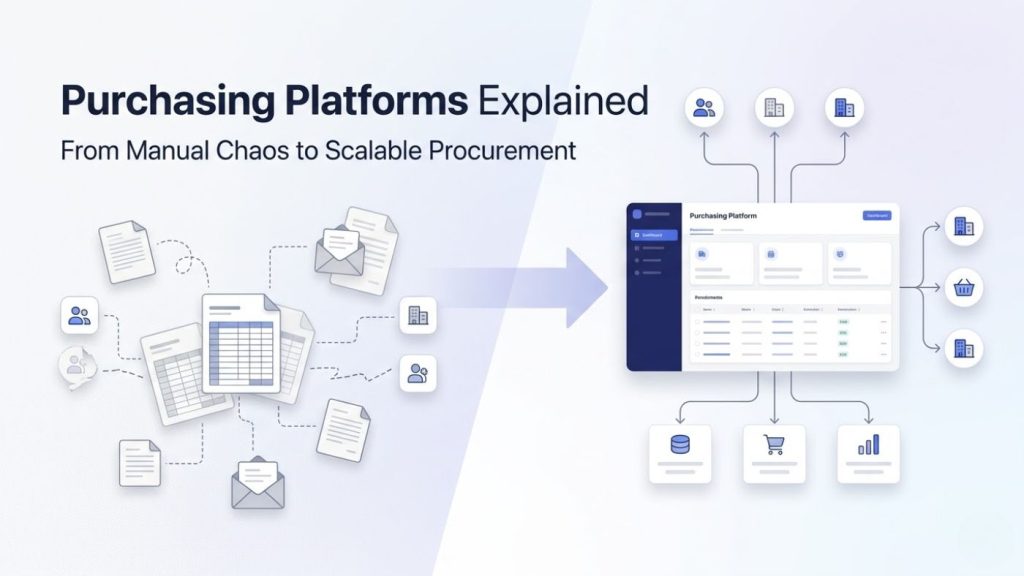
Does this sound familiar? Your procurement department is playing spreadsheets, email messages, and disjointed supplier portals. Purchase orders get lost. Approval workflows stall. Margins are quietly drained out by pricing inconsistencies. The onboarding of the suppliers, which used to take hours, extends to weeks. And, in case this is your everyday life, you are not the only one, and there is a more appropriate way.
The businesses today work in an environment where the speed of procurement, the visibility of data, and the relations with suppliers are the direct competitive advantages. However, there are still numerous organizations that use outdated processes that introduce bottlenecks, compliance loopholes, and redundant expenses. A well-implemented purchasing platform doesn’t just digitize paperwork; it transforms procurement into a strategic, measurable, and scalable function.
In this comprehensive guide, we break down exactly what purchasing platforms and B2B sourcing marketplaces are, how they work, what types exist, and critically, how to choose the right one for your business. Whether you’re evaluating your first B2B procurement platform or rethinking an existing stack, this guide is built to help you make the most informed decision possible.
What Is a Purchasing Platform?
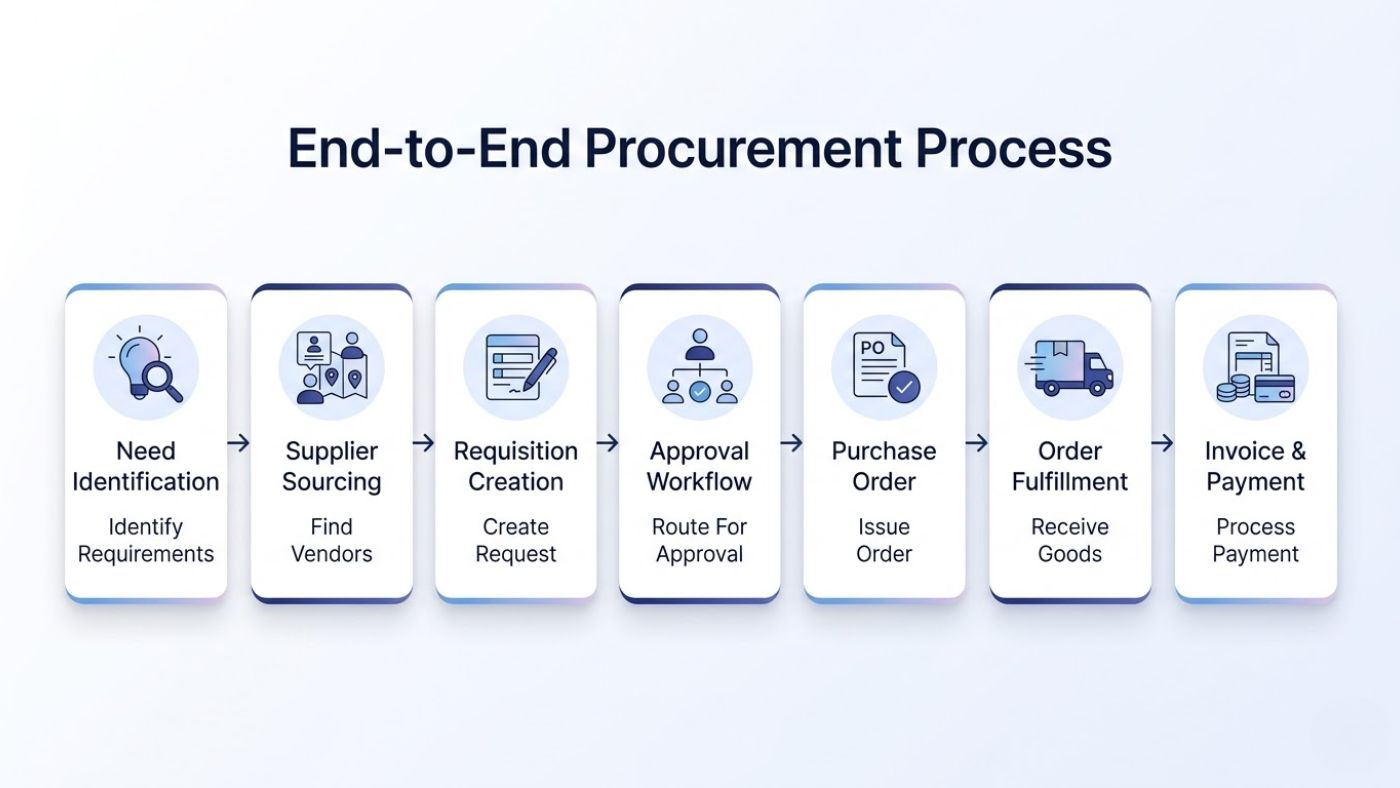
A purchasing platform is a digital system that centralizes, automates, and manages the end-to-end procurement process from identifying needs and sourcing suppliers, through purchase order creation, approvals, and payment reconciliation. Just imagine it like the support of your supply chain, that is, the operations backbone between the team within your internal supply chain and your external supply chain.
In B2B contexts specifically, a B2B procurement platform is designed to handle the complexity of business-to-business purchasing: multi-level approval hierarchies, contract-based pricing, bulk ordering, custom catalogs, and compliance requirements that simply don’t exist in consumer commerce.
Procurement is not a back-office activity only anymore. It is a kind of strategic lever, and what site you select determines your effectiveness in pulling it.
A good purchasing platform essentially solves the “procurement triangle”: it reduces cost, improves compliance, and increases control all at once. With all three forces in balance, business normally experiences shorter cycle times, reduced maverick purchases, and much better supplier relationships.
with e-procurement
manual processes
spend visibility post-implementation
Key Components & Layers
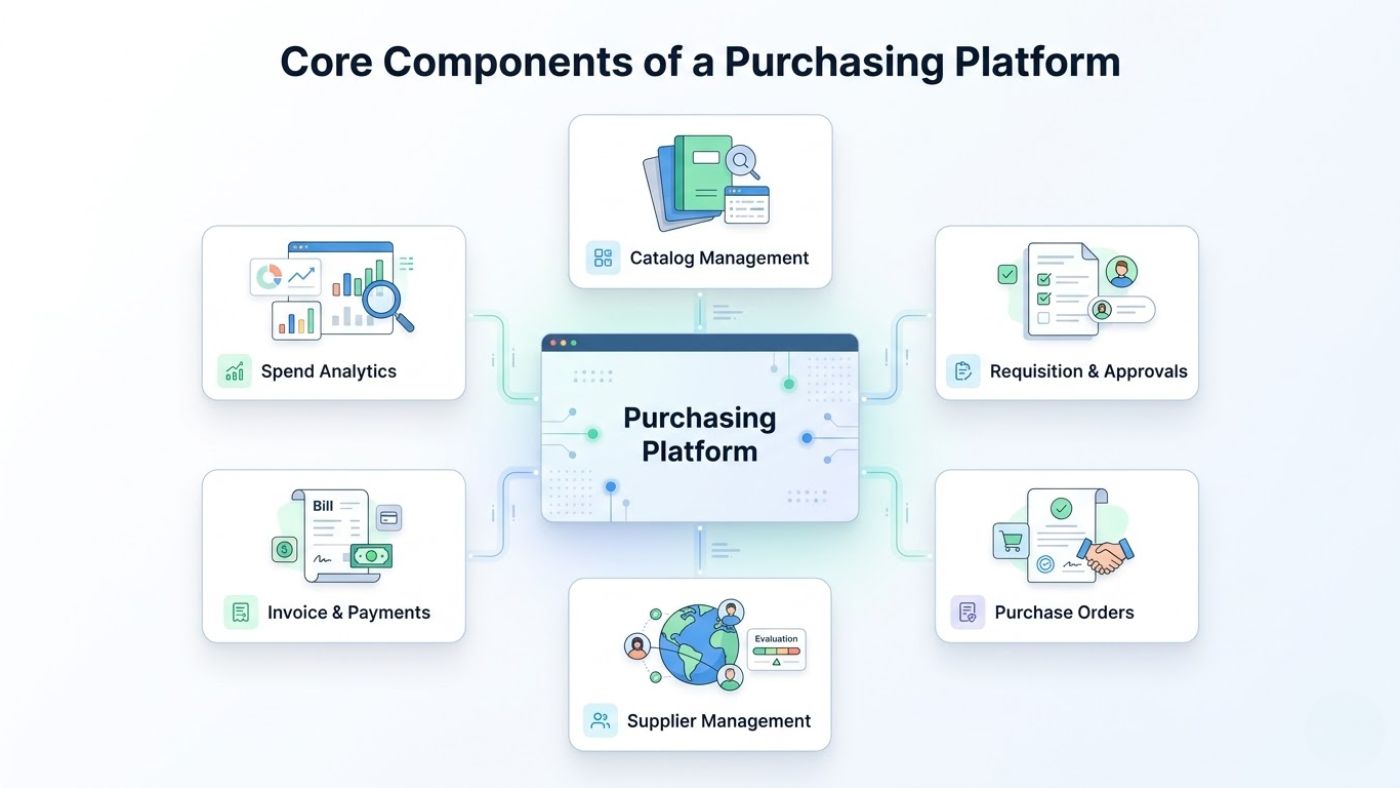
Understanding what lives inside a purchasing platform helps you evaluate any solution more critically. Most full-grown platforms have a similar architecture consisting of the following layers that are connected to each other:
1. Catalog Management
Centralized and searchable product and services catalogs that contain punchout catalogs linked with third-party supplier websites with pre-applied contract prices.
2. Requisition & Approval Workflows
Flexible multi-step approval chains route requests on a spend limit, department, or category with no manual bottlenecks.
3. Purchase Order Management
Automated PO generation, dispatch, and tracking that is automated and provides real-time status that is visible to the buyers and suppliers.
fou. Supplier Management
Onboarding, performance scoring, compliance tracking, and communication tools that transform supplier relationships into measurable and manageable.
5. Invoice Reconciliation and Payments
Automatic 3-way matching (PO, receipt, invoice) to identify inconsistencies, minimize errors, and accelerate the payment process.
6. Spend Analytics & Reporting
Live dashboards that can show in detail what is happening to the money at the supplier, category, department, or project.
These elements do not operate as islands. A well-designed B2B procurement platform integrates all of them into a seamless flow from the moment a need is identified to the moment the invoice is settled. This architecture can be further extended into your wider business systems by ERP integrations (SAP, Oracle, NetSuite) and API connectivity.
Main Types of Purchasing Platforms
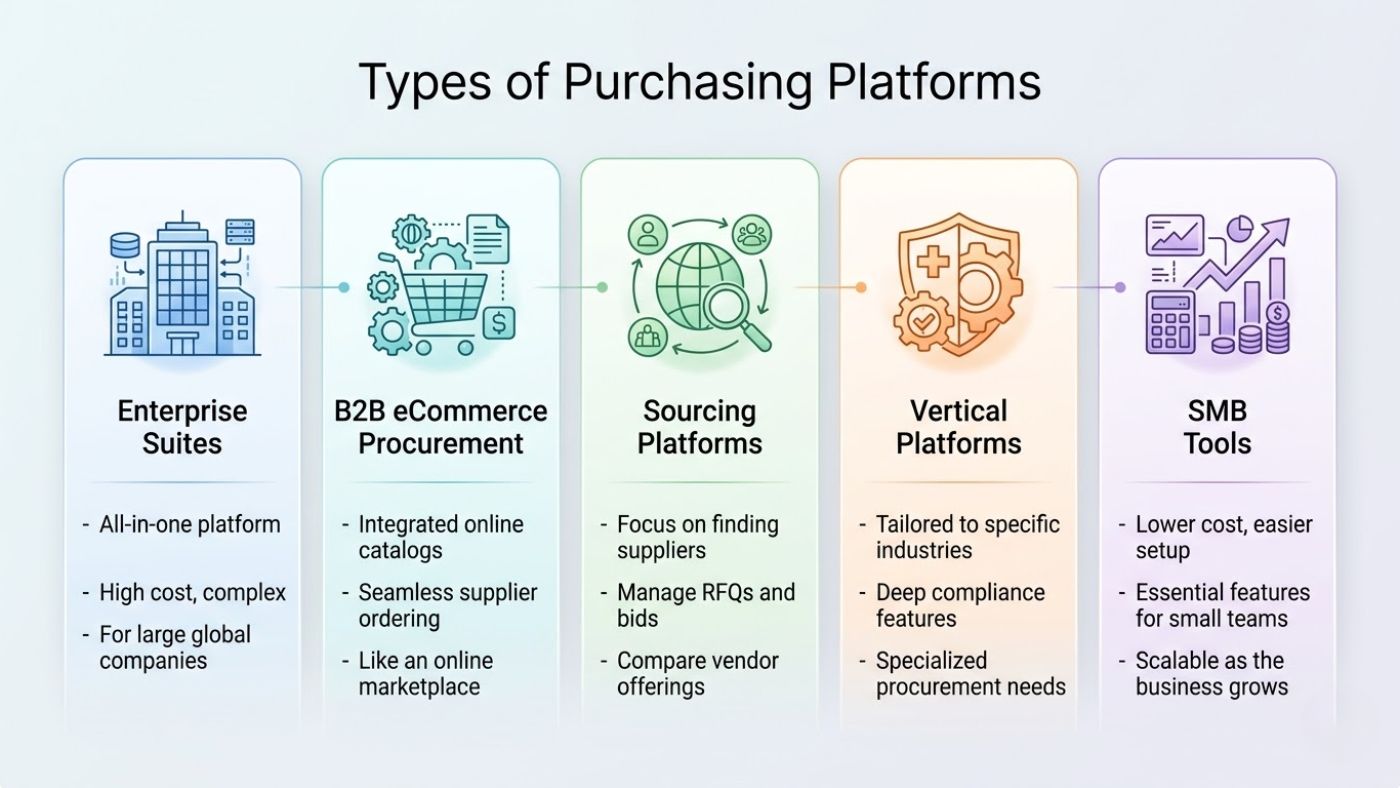
The market is not an all-purpose one. Purchasing platforms come in several distinct flavors, each optimized for different organizational sizes, procurement strategies, and industry needs. Here’s how they break down:
1. Enterprise Procurement Suites
These are large enterprise, turnkey solutions that cater to the complex procurement requirements of a large organization. They encompass the entire Source-to-Pay (S2P) or Procure-to-Pay (P2P) cycle. They are SAP Ariba, Coupa, and Oracle Procurement Cloud. They are robust, yet they have a high implementation complexity and cost.
2. B2B eCommerce Procurement Platforms
A B2B procurement marketplace or eCommerce-native procurement platform combines the flexibility of online shopping with the compliance controls of enterprise procurement. They are especially useful to companies that demand self-service customer purchasing experiences with guardrails in mind, consider custom catalogs, negotiated pricing levels, and purchasing restrictions based on roles to be embedded into an eCommerce interface.
3. Sourcing and Supplier Discovery Systems
These platforms pay special attention to the upstream stage: the identification, assessment, and recruiting of suppliers. A dedicated sourcing platform helps businesses run RFIs (Requests for Information), RFPs (Requests for Proposal), and reverse auctions to identify best-fit vendors competitively.
4. Vertical-Specific Procurement Platforms
However, there are other industries’ procurement needs that are too specialized, such as the healthcare, construction, manufacturing, and government industries, that a horizontal platform cannot sufficiently meet. Vertical platforms incorporate industry-specific rules of compliance, contract types, and catalog structures into the workflow.
5. Mid-Market & SMB Procurement Solutions
Lightweight platforms that cater to small-to-medium businesses, requiring core procurement automation but not at enterprise complexity or cost. They are generally cloud-native, fast to deploy, and subscription-based.
B2B Sourcing Marketplace Close-up
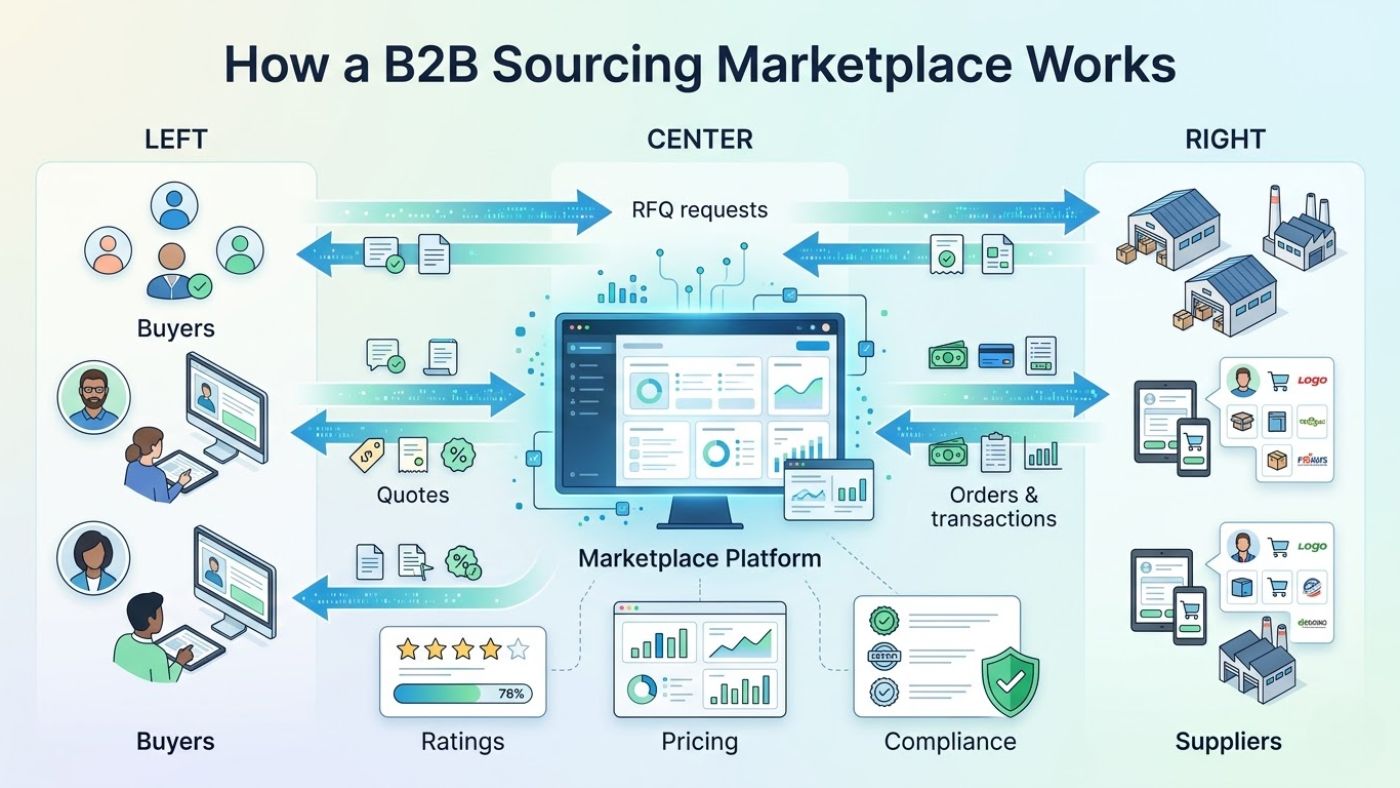
A B2B sourcing platform deserves special attention because it sits at the intersection of procurement technology and supplier discovery. A B2B sourcing marketplace is a multi-vendor dynamic, contrasting a fixed internal catalog by allowing buyers to shop, compare, and buy within a curated group of suppliers, usually in real time.
The major distinguishing characteristics of a quality B2B sourcing marketplace are:
- Pre-vetted supplier networks: Quality built-in buyers do not have to begin with supplier due diligence.
- Real-time pricing & availability: Dynamic feeds are used to substitute the traditional price lists and enhance the level of precision and negotiation strength.
- Integrated RFQ (Request for Quote) workflows: Buyers are able to seek competitive quotes for various supplies at the same time within the platform.
- Compliance & documentation management: Certificates, insurance documents, and regulatory compliance are automatically tracked and flagged.
- Transparent supplier performance data: Ratings, delivery statistics, and dispute records make wiser supplier selection.
Current Advantages of the Present-day Companies
A well-chosen purchasing platform doesn’t just solve today’s procurement headaches; it positions your organization to scale procurement intelligently. The following are the most important benefits that are involved:
Cost Reduction at Scale
Centralizing spend data will allow volume consolidation, negotiations of better contracts, and elimination of duplicates or maverick purchases. Addressable spend savings of 8-15% within the first year are realized by many organizations.
Vendor Turnaround Quick Procurement
What would have taken days of email back-and-forth takes minutes. Digital approvals, automated workflows, and catalogs that have been pre-approved reduce cycle times by a factor of four.
Full Spend Visibility
Real-Time dashboards show the actual money flow of where it is and where it should not be. It is based on this visibility that a meaningful spend optimization strategy can be established.
Better Relationships with suppliers
When all the communication, orders, and performance data are located in a single place, in this case, the suppliers become genuine partners and not transaction counterparties.
Compliance & Risk Management
Automated policy enforcement so that employees are not able to bypass the spend controls, and audit trails allow regulatory compliance to be made easy and not painful.
Scalability Without Headcount Growth
As transactions increase, the platform can be scaled without a similar increase in the number of procurement personnel.
Platform Comparison: Key Types at a Glance
| Platform Type | Best For | Key Strength | Typical Complexity |
| Enterprise Suite (SAP Ariba, Coupa) | Large enterprises, global ops | End-to-end S2P coverage | High |
| B2B eCommerce Procurement | Product-heavy B2B buying | Buyer UX + compliance controls | Medium |
| B2B Sourcing Marketplace | Supplier discovery & RFQs | Multi-vendor competition | Medium |
| Vertical-Specific Platform | Healthcare, construction, gov | Industry compliance built-in | High |
| Mid-Market / SMB Tools | Growing businesses | Speed to value, ease of use | Low |
| Custom-Built Platform | Complex or unique requirements | Full flexibility + integration depth | Configurable |
Best Practices to Be Implemented
Even the most powerful purchasing platform will underdeliver if it’s implemented poorly. The following best practices make the difference between a successful and costly rollout:
1. Start with a Spend Analysis
Know your present spending landscape to choose any platform. Where is the money going? What are the most supplier categories? In what areas does maverick expend the most? An effective spend baseline allows you to know which features of the platform are the most important and avoid paying to use the features you will not utilize.
2. Map Your Procurement Processes First
Do not allow the platform to direct your process document the way you want your process to be before configuration has started. What approval levels exist? What are the departments with special needs? What suppliers are to be handled specially? Such a mapping exercise avoids expensive rework in the future.
3. Prioritize Integration Early
A procurement platform that is not integrated with your ERP, finance system, and supplier network. ERP integration (especially of GL coding, budget validation, and payment processing) is not something to consider later, but as a Day 1 requirement.
4. Invest in Supplier Enablement
The platform can only be as good as the suppliers agree to make use of it. Establish a formal supplier onboarding program that involves training, proper communication of expectations, and continuous assistance. The rates of adoption on the supplier side are the direct determinant of the ROI that you will get.
5. Develop Change Management Plan
The least considered risk when it comes to procurement transformation is internal resistance. The finance teams, department heads, and the operations staff are subject to changes in the procurement process. The adoption and continued use are enhanced significantly with an organized change management program with early stakeholder engagement, effective communications, and training.
6. Measure What Matters
Define KPIs before go-live. The most common procurement metrics are PO cycle time, supplier on-time delivery rate, percentage of spend under management, cost savings made, and compliance rate. Frequent reporting against these metrics makes continuous improvement remain on the agenda.
How to Choose the Right Purchasing Platform
The platform can be a confusing decision with dozens of possible options available on the market. This is a decision framework that would help eliminate the noise:
Step 1: Understand the Procurement Maturity Level
Is it your first digital tool that you are leaving spreadsheets? Or do you upgrade an existing platform that has reached capacity? The level of maturity you have at the moment dictates whether you should get a basic system or a sophisticated system. Under-buying: It results in complexity due to the honest overspending on features, and over-buying will make you re-platform in 18 months.
Step 2: Know Your Must-have vs. Nice-to-Have Feature
List the features in order of priority. Must-haves: The non-negotiable approval processes, ERP integration, and catalog management. Items such as nice-to-haves are welcome, but nonblocking advanced analytics, supplier portal, and mobile apps are not. This list is used to rate and compare vendors on an objective basis.
Step 3: Evaluate the Integration Requirements
Identify all systems that the platform will have to interface with: ERP, HRIS (to access employee data and cost centers), payment provider, supplier network, and any industry-specific compliance solutions. Connectors that are built in on platforms will bring faster value.
Step 4: Assess Total Cost of Ownership (TCO)
The cost of license fees is not all. Include implementation services, training, change management, continued support, integration development, and the costs required to upgrade it in the future. A cheaper platform that has high implementation costs tends to be expensive in three years as compared to a more expensive platform with a shorter time -to-value.
Step 5: Require a Proof of Concept
Prior to committing, test a structured pilot using real data and using real users. Concentrate on the processes with which your team operates most frequently. In case the platform has a problem with core processes in a controlled environment, it will have an even greater problem in production.
B2B Procurement Constructed to Know Actual Business Complexity
SpxCommerce is a B2B commerce and procurement platform that is fully dedicated to organizations that have outgrown generic solutions. We know that there are no two B2B purchasing paths that are similar. This is why our platform is designed to be flexible, deeply integrated, and perform at the enterprise level, without the nightmare of enterprise-grade implementation.
- Unique catalog and contract pricing administration of multifaceted B2B dealings.
- Multi-level approval purchasing controls.
- Ready-to-use ERP integrations (SAP, Oracle, NetSuite, and others).
- Supplier portal containing self-service onboarding and performance dashboards.
- Live spend consolidation and custom reporting dashboards.
- Headless architecture to customize the front-end easily.
- Specific implementation and after launch, success teams.
Conclusion
The procurement is experiencing change at a greater level over the past few decades. The shift from manual, paper-based processes to intelligent, integrated purchasing platforms isn’t a technology trend; it’s a business imperative. Companies that adopt this change are accelerating, becoming smarter in their spending and developing ties with their suppliers that drive actual competitive moats.
Whether your priority is cost reduction, compliance improvement, or simply giving your procurement team back its time, the right B2B procurement platform is the foundation on which everything else is built. The trick here is to settle on one that is consistent with your real complexity, as opposed to your dreams.
At SPX Commerce, we have created our platform with the specific world of B2B procurement, a nuanced, relationship-oriented, and high-stakes environment. We do not simply sell software to organizations to convert the procurement into a quantifiable strategic value. We would be happy to discuss platforms or reconsider your current strategy.
FAQs
What is a purchasing platform?
A purchasing platform is a digital system that manages and automates the procurement process, including supplier sourcing, purchase orders, approvals, and invoice reconciliation, all within a centralized platform.
What is a B2B sourcing platform?
A B2B sourcing platform helps businesses discover, evaluate, and connect with suppliers. It usually comprises RFQ, supplier comparison, and competitive bidding tools to identify the most suitable vendors.
What is a B2B procurement marketplace?
A B2B procurement marketplace is a multi-vendor platform where businesses can browse products from different suppliers, compare pricing, request quotes, and place orders within one unified system.
How does a sourcing platform improve procurement efficiency?
A sourcing platform streamlines supplier discovery, automates quote requests, and enables competitive bidding, which helps businesses find reliable suppliers faster and negotiate better pricing.
What are the benefits of using a B2B procurement platform?
The advantages of businesses are reduced procurement costs, increased speed of purchase, better visibility of expenditure, enhanced supplier relationships, and enhanced adherence of businesses to purchasing policies.
How do businesses choose the right procurement platform?
Businesses should evaluate their procurement complexity, required features, integration with ERP systems, total cost of ownership, and scalability before selecting the right purchasing platform.
Written by
-