In the cutthroat world of online retail, having a “killer product” is only half the battle; without a map, your customers are essentially lost at sea. This is where a high-performing ecommerce sales funnel becomes your North Star. Think of it as a masterfully designed waterslide: once a visitor hops in at the top, every twist and turn is engineered to glide them effortlessly toward the splashdown, “the purchase”.
The stakes have never been higher. Recent data shows that the average ecommerce conversion rate sits at a modest 2.5% to 3%, meaning nearly 97% of your traffic might be slipping through the cracks. If your store feels like a “leaky bucket,” you aren’t just losing sales; you’re throwing your marketing budget down the drain.
In this comprehensive guide, we are going to pull back the curtain on the anatomy of a high-converting journey. We’ll break down the AIDA framework, explore abandoned cart recovery tactics that recoup millions in lost revenue, and share real-world ecommerce strategies used by top-tier brands.
Understanding the Ecommerce Sales Funnel
At its core, an ecommerce sales funnel is a visual representation of the customer journey, from their first interaction with your brand to the point of conversion (and often beyond). It’s called a “funnel” because, like a physical funnel, it starts wide at the top, encompassing a large number of potential customers, and gradually narrows down as people progress through the stages, with only a fraction emerging as actual buyers at the bottom.
This structured approach enables businesses to identify where customers are dropping off, optimize their marketing efforts, and ultimately boost conversion rates. It’s not just about making a sale; it’s about building a relationship and understanding your customer’s mindset at every step.
Why is an Ecommerce Sales Funnel Crucial for Your Business?
Having a well-defined ecommerce sales funnel isn’t just a good idea; it’s a necessity for several compelling reasons:
Improved Conversion Rates
By understanding each stage, you can tailor your messaging and offers, making it easier for customers to move to the next step. This directly leads to more sales.
Better Resource Allocation
Knowing where your customers are in the funnel helps you allocate your marketing budget more effectively. For instance, you wouldn’t use the same ad strategy for someone who’s never heard of you as you would for someone with items in their cart.
Enhanced Customer Understanding
The funnel provides insights into customer behavior, pain points, and motivations at different stages. This understanding is invaluable for refining your products, services, and overall customer experience.
Predictable Growth
A well-optimized funnel creates a more predictable sales cycle, allowing you to forecast revenue and plan for future growth more accurately.
Reduced Customer Acquisition Cost (CAC)
By streamlining the journey and addressing potential roadblocks, you can acquire customers more efficiently, thereby lowering your customer acquisition cost.
The Stages of an Ecommerce Sales Funnel
While the exact terminology might vary slightly, most ecommerce sales funnels follow a similar multi-stage structure. Let’s break down each stage in detail using a popular framework: Awareness, Interest, Desire, and Action (AIDA), which is often extended to include Retention.
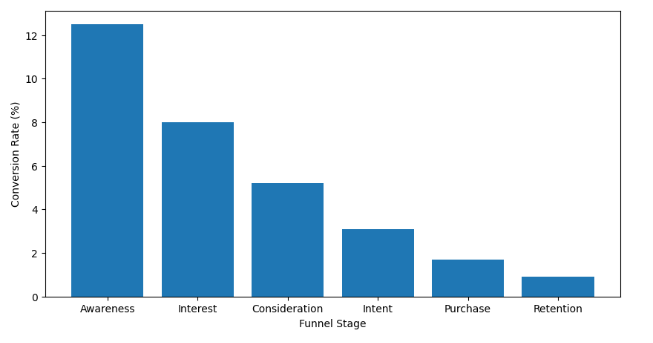
Here’s a visual representation of a typical ecommerce sales funnel:
1. Awareness (Top of the Funnel – ToFu)
This is the widest part of the funnel, where potential customers first become aware of your brand, product, or service. They might not even be actively looking to buy yet; they’re simply discovering a problem or a need.
Goal: To attract as many relevant potential customers as possible and introduce them to your brand.
Key Activities & Strategies:
Content Marketing: Blog posts (like this one!), articles, guides, infographics, and videos that address common customer pain points or interests. This helps establish your brand as a thought leader.
Search Engine Optimization (SEO): Optimizing your website and content for relevant keywords helps ensure your brand appears prominently in search results when potential customers are looking for information.
Social Media Marketing: Engaging content on platforms like Facebook, Instagram, TikTok, and Pinterest to increase brand visibility and reach a wider audience. Social media engagement is vital here.
Paid Advertising (PPC): Running ads on Google, social media, or other platforms targeting specific demographics and interests to quickly increase brand awareness.
Influencer Marketing: Collaborating with influencers who have an audience relevant to your products to promote your brand.
Public Relations (PR): Getting mentions in reputable publications or media outlets.
Example: A person searches on Google for “how to choose running shoes for flat feet” and stumbles upon your blog post comparing different types of running shoes. They become aware of your shoe brand as a potential solution.
2. Interest (Middle of the Funnel – MoFu)
Once aware, potential customers show greater interest in your offerings. They’re no longer just passively consuming information; they’re actively seeking more details and comparing options.
Goal: To educate potential customers about your products/services and nurture their interest, positioning your brand as a viable solution.
Email Marketing: Building an email list and sending targeted newsletters, product updates, and educational content. Offering a lead magnet (e.g., an ebook or discount code) in exchange for an email address is a common tactic.
Comparison Guides: Helping customers understand how your products stack up against competitors or different variations within your own line.
Webinars & Demos: For more complex products, providing live or recorded demonstrations can be very effective.
Retargeting Ads: Showing ads to people who have already visited your website but haven’t made a purchase. This keeps your brand top-of-mind.
Customer Testimonials & Case Studies: Demonstrating social proof and showing how others have benefited from your products.
Example: The person who read your blog post about running shoes then visits your website, browses several product pages, and signs up for your newsletter to receive a 10% discount on their first purchase.
3. Desire (Middle of the Funnel – MoFu)
At this stage, the potential customer has moved beyond mere interest and has developed a strong desire for your product. They’re convinced your offering is the best solution for their needs, but they might need a final nudge to commit.
Goal: To convert interest into a strong desire to purchase, often by addressing objections and highlighting unique value propositions.
Key Activities & Strategies:
Personalized Offers: Tailoring discounts or promotions based on browsing history or items in their cart.
Limited-Time Offers & Scarcity: Creating a sense of urgency (e.g., “Sale ends in 24 hours,” “Only 3 left in stock!”).
Social Proof: Showcasing more customer reviews, ratings, and endorsements.
Live Chat Support: Providing immediate answers to questions and addressing concerns in real-time.
Guarantees & Warranties: Reducing perceived risk with strong return policies, money-back guarantees, or product warranties.
User-Generated Content (UGC): Featuring photos or videos of real customers using your products.
Example: The customer receives an email from your brand with a personalized recommendation for a specific running shoe model based on their browsing history, along with a free shipping offer for a limited time. They’re now strongly considering making a purchase.
4. Action (Bottom of the Funnel – BoFu)
This is the ultimate goal of the sales funnel: the purchase. The customer takes the desired action, whether it’s making a purchase, signing up for a service, or filling out a lead form.
Goal: To facilitate a smooth and seamless checkout process and successfully convert the potential customer into a paying customer.
Key Activities & Strategies:
Optimized Checkout Process: A simple, intuitive, and secure checkout that minimizes friction. Avoid requiring too many steps or unnecessary information.
Multiple Payment Options: Offering a variety of payment methods (credit cards, PayPal, Apple Pay, Afterpay, etc.) to cater to different preferences.
Clear Call-to-Actions (CTAs): Prominent, unambiguous buttons such as “Add to Cart,” “Buy Now,” or “Checkout.”
Abandoned Cart Recovery: Sending automated email reminders to customers who added items to their cart but didn’t complete the purchase. This is a critical ecommerce strategy for recouping lost sales.
Trust Badges: Displaying security badges (SSL certificates) and logos of trusted payment providers to build confidence.
Free Shipping Thresholds: Encouraging customers to add more to their cart to qualify for free shipping.
Example: Convinced by the personalized offer and free shipping, the customer clicks “Add to Cart,” proceeds to a streamlined checkout process, and successfully completes their purchase of the running shoes.
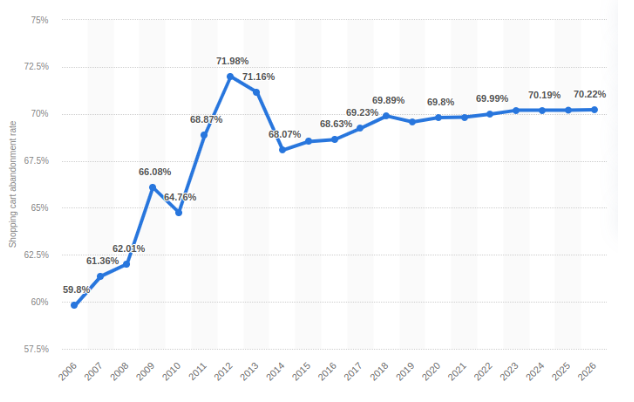
According to Statista, the global abandoned cart rate for 2025 was 70.19%. This highlights the immense opportunity for businesses to optimize their checkout processes and implement effective abandoned-cart recovery strategies to boost conversions.
5. Retention & Advocacy (Post-Purchase)
The funnel doesn’t end with a sale! In fact, the post-purchase experience is crucial for building customer loyalty, encouraging repeat purchases, and turning customers into brand advocates. This is often referred to as the “Loyalty Loop” or “Flywheel”.
Goal: To foster customer loyalty, encourage repeat purchases, and inspire customers to spread positive word-of-mouth about your brand.
Key Activities & Strategies:
Excellent Customer Service: Providing prompt and helpful support for any post-purchase queries or issues.
Order Confirmation & Tracking: Keeping customers informed about their order status and delivery.
Post-Purchase Email Sequences: Sending thank-you emails, product care tips, related product recommendations, and asking for reviews.
Loyalty Programs: Rewarding repeat customers with points, discounts, or exclusive access.
Feedback & Surveys: Asking customers for their opinions to improve products and services.
Referral Programs: Incentivizing customers to refer new buyers to your brand.
Community Building: Creating spaces (e.g., Facebook groups) where customers can interact with each other and your brand.
Example: After receiving their running shoes, the customer receives a thank-you email with a link to shoe-care tips and an invitation to join your loyalty program. A few weeks later, they received an email asking for a product review and offering a discount on their next purchase. Impressed with the experience, they leave a glowing review and tell their friends about your brand.
Here’s a breakdown of how different marketing activities align with each funnel stage:
Sales Funnel Stage
Marketing Activities
Key Metrics to Track
Awareness
SEO, Content Marketing, Social Media Ads, Influencer Marketing, PPC
Website Traffic, Impressions, Reach, Social Mentions
Interest
Email Marketing, Retargeting Ads, Blog Posts, Product Demos, Comparison Guides
Click-Through Rate (CTR), Time on Page, Bounce Rate, Email Opens
Desire
Personalized Offers, Limited-Time Discounts, Live Chat, Customer Reviews, Guarantees
Add-to-Cart Rate, Conversion Rate of specific offers
Repeat Purchase Rate, Customer Lifetime Value (CLV), Churn Rate
Key Metrics to Measure at Each Conversion Funnel Stage
To effectively optimize your ecommerce sales funnel, you need to track relevant metrics at each stage. This data provides insights into what’s working and what needs improvement.
Awareness Metrics
Website Traffic: Number of visitors to your site.
Impressions: How many times your ads or content were displayed.
Reach: The number of unique users who saw your content.
Brand Mentions: How often your brand is talked about online.
Interest Metrics
Click-Through Rate (CTR): The percentage of people who clicked on your links or ads.
Time on Page: How long visitors spend on specific pages.
Bounce Rate: The percentage of visitors who leave your site after viewing only one page.
Email Open Rate: The percentage of recipients who open your emails.
Engagement Rate: Likes, shares, comments on social media.
Desire Metrics
Add-to-Cart Rate: The percentage of visitors who add items to their shopping cart.
Conversion Rate (of specific offers): How many people convert after seeing a particular promotion.
Lead Conversion Rate: If applicable, the percentage of leads that move to the next stage.
Action Metrics
Conversion Rate: The percentage of website visitors who complete a purchase. This is a critical ecommerce KPI.
Revenue: Total sales generated.
Average Order Value (AOV): The average amount spent per transaction.
Abandoned Cart Rate: The percentage of customers who start but don’t complete checkout.
Retention Metrics
Repeat Purchase Rate: The percentage of customers who buy from you more than once.
Customer Lifetime Value (CLV): The total revenue a customer is expected to generate over their relationship with your business.
Customer Churn Rate: The percentage of customers who stop purchasing from your business.
Referral Rate: The number of new customers acquired through referrals.
How to Build Your Ecommerce Sales Funnel Strategy
Developing a robust ecommerce sales funnel strategy involves more than just understanding the stages; it requires careful planning, execution, and continuous optimization.
1. Define Your Target Audience
Who are you trying to reach? Create detailed buyer personas that include demographics, psychographics, pain points, motivations, and online behavior. Understanding your audience is foundational to tailoring your funnel effectively.
2. Map the Customer Journey
Visualize how your ideal customer moves through each stage of your funnel. What questions do they have? What obstacles might they encounter? And what information do they need at each point? This helps identify touchpoints and potential friction points.
3. Choose the Right Marketing Channels
Based on your target audience and their online behavior, select the most effective marketing channels for each funnel stage. For example, TikTok might be great for raising awareness among a younger demographic, while LinkedIn could be better for building B2B interest.
4. Create Compelling Content for Each Stage
Develop specific content pieces tailored to the customer’s mindset at awareness, interest, desire, and action stages. Remember the difference between a top-of-funnel educational blog post and a bottom-of-funnel product comparison.
5. Optimize Your Website and Product Pages
Your website is the heart of your ecommerce sales funnel. Ensure it’s user-friendly, mobile-responsive, loads quickly, and has clear navigation. Product pages should be informative, persuasive, and visually appealing.
6. Implement Strong Call-to-Actions (CTAs)
Guide your customers with clear and concise CTAs. Use action-oriented language and make them visually prominent.
7. Leverage Marketing Automation
Automate tasks like email sequences, abandoned cart reminders, and personalized recommendations. Marketing automation saves time and ensures consistent communication.
8. Analyze and Optimize Continuously
The ecommerce sales funnel is not a set-it-and-forget-it system. Regularly analyze your metrics, identify bottlenecks, and A/B test different elements (headlines, CTAs, product images, email subject lines) to continuously improve performance. This iterative process is key to long-term success.
Awareness: Instagram ads showcasing new collections, fashion blog posts about seasonal trends, and TikTok videos of influencers unboxing products.
Interest: Website visitors browsing category pages, signing up for newsletters for style tips, and downloading a “Fall Lookbook” via email.
Desire: Retargeting ads showing specific items they viewed, personalized emails with limited-time discounts on those items, and live chat support for sizing questions.
Retention: Post-purchase emails with styling suggestions, loyalty program offering points for purchases, and early access to sales for loyal customers.</span>
Example 2: SaaS Product (Software as a Service)
Awareness: Google Ads targeting keywords like “project management software,” blog posts comparing productivity tools, and webinars on industry challenges.
Interest: Visitors exploring feature pages, downloading a free trial, and watching a product demo video.
Desire: Personalized onboarding emails highlighting features relevant to their stated needs, customer testimonials, and case studies showing ROI.
Action: Easy upgrade path from free trial to paid subscription, transparent pricing page, and in-app messaging offering support.
Retention: Regular feature updates, dedicated customer success managers for enterprise clients, community forum for users, renewal reminders.</span>
Example 3: Subscription Box Service
Awareness: Social media ads with visually appealing unboxing videos, PR mentions in lifestyle blogs, and partnerships with relevant content creators.
Interest: Landing page with a clear value proposition, an FAQ section, examples of past boxes, and an email sign-up for “sneak peeks.”
Action: Simple subscription flow, option to choose subscription length, and clear recurring billing information.
Retention: “Welcome” box with extra goodies, personalized product recommendations in subsequent boxes, community group for subscribers, easy pause/cancel options.
The Role of Data in Optimizing Your eCommerce Sales Funnel
Data is the lifeblood of an effective ecommerce sales funnel. Without it, you’re essentially flying blind. Tools like Google Analytics, your CRM (Customer Relationship Management) system, and analytics from various marketing platforms provide invaluable insights.
Here’s a pie chart illustrating where businesses typically invest their marketing budget in the funnel:
Transform Your Ecommerce Sales Funnel with SPXCommerce
Building a high-converting ecommerce sales funnel is a complex balancing act of data, design, and strategy. At SPXCommerce, we specialize in turning those “leaky” funnels into high-performance revenue engines. Our team of experts leverages advanced conversion rate optimization (CRO) techniques and data-driven insights to refine every touchpoint from first-click awareness to long-term customer retention.
Whether you’re struggling with high abandoned cart rates or looking to scale your average order value (AOV), we provide the tools and expertise needed to streamline the customer journey. We don’t just drive traffic; we build sustainable ecommerce strategies that foster brand loyalty and advocacy. Ready to see your conversion numbers soar? Contact SPXCommerce today for a comprehensive funnel audit, and let’s grow your business together.
Q1. How does SPXCommerce identify "leaks" in the ecommerce sales funnel?
We perform a deep-dive funnel audit using advanced heatmaps, session recordings, and Google Analytics 4 (GA4) data. By analyzing the drop-off rate at each stage from the product page to the final checkout, we pinpoint exactly where potential customers are losing interest and why.
Q2. Can you help reduce my abandoned cart rate?
Absolutely. Reducing cart abandonment is one of our core strengths. We implement a multi-layered ecommerce strategy that includes optimizing the checkout UX for speed, setting up automated retargeting ads, and deploying high-converting email recovery sequences to bring back hesitant shoppers.
Q3. What platforms do you support for funnel optimization?
Our team is platform-agnostic but specializes in the heavy hitters. Whether you are running on Shopify, WooCommerce, Magento, or BigCommerce, we can integrate our optimization tools and custom scripts to ensure your funnel is running at peak efficiency.
Q4. Does SPXCommerce provide content creation for the Awareness stage?
Yes. To feed the top of your funnel (ToFu), we offer SEO-optimized content marketing and social media management. We focus on driving high-intent traffic through long-tail keywords and engaging visuals that build immediate brand awareness.
Q5. How do you measure the success of a funnel project?
We focus on the metrics that impact your bottom line. Our primary KPIs include Conversion Rate (CR), Return on Ad Spend (ROAS), and Customer Lifetime Value (CLV). We provide transparent, real-time dashboards so you can see the direct impact of our optimizations on your revenue.
Q6. How long does it take to see results from your funnel services?
While some technical fixes (such as improving site speed or fixing checkout bugs) can yield immediate results, a full-scale funnel optimization usually delivers significant, data-backed improvements within 30 to 60 days of implementation and testing.