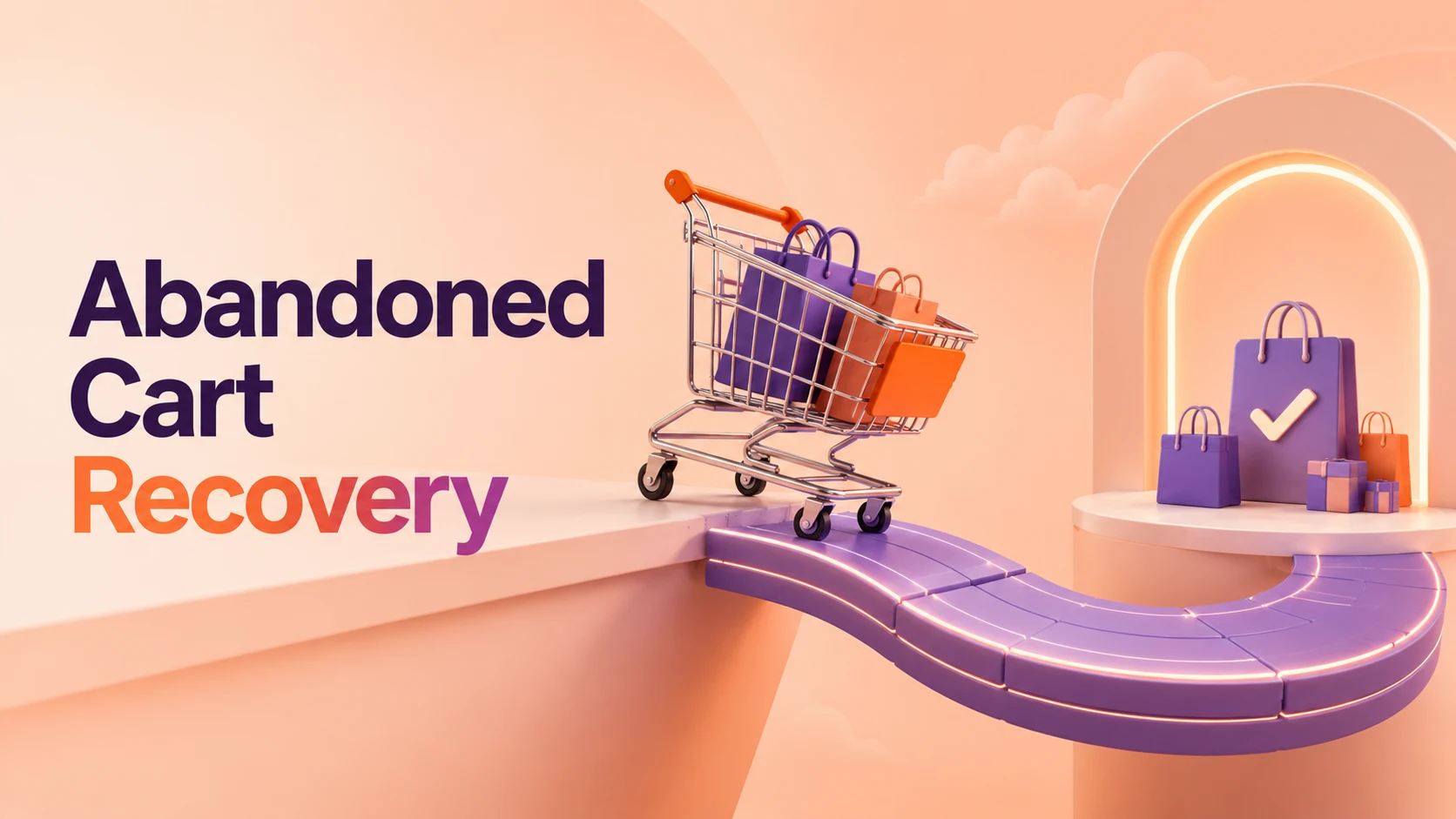
A customer visits your marketplace, explores products, and adds three items to their cart, only to disappear. No purchase. No explanation. The abandoned cart remains in your database. If you’re feeling like this is a scenario you find yourself in all the time, you’re not the only one. Almost 70% of online shoppers leave their carts without completing a purchase, meaning that in every eCommerce store, 7 out of 10 customers are lost at checkout.
Cart abandonment challenges continue to increase across digital commerce channels. Whether it’s high shipping charges at checkout, a required account, slow-loading pages, or a moment of hesitation, there are things that can cause a sale to drop in seconds. This challenge is particularly significant for multi-vendor marketplaces, where buyer trust is inherently more fragile.
In eCommerce, abandoned cart recovery is one of the most effective return-on-investment strategies available to businesses today. These shoppers have already demonstrated purchase intent, so re-engaging them is much more cost-effective and more likely to convert. By combining a cart abandonment email sequence, SMS cart recovery, and cart abandonment retargeting, businesses can recover significant lost revenue and improve conversion rates.
In this guide, you’ll learn about each component of a powerful abandoned cart recovery program, including triggers and timing, tools, and the importance of an AI-powered customer experience platform.
What Is Abandoned Cart Recovery?
Abandoned cart recovery is a series of tactics and automated processes used to re-engage customers who have added items to their carts but never checked out. It focuses on warm leads who already know your products, delivering a significantly higher ROI than top-of-funnel acquisition efforts.
A complete recovery architecture will usually consist of:
- Detect cart inactivity to trigger automated recovery workflows.
- Multi-channel outreach (email, SMS, push notifications, and paid retargeting)
- A personalization engine displays the specific items left in each shopper’s cart.
- This is the incentive logic, where discounts are timed or free shipping is offered to eliminate friction.
- Analytics and attribution capabilities measure recovery rates and evaluate channel ROI.
Key Insight
Multi-email sequences have been shown to recover up to 69% more orders than a single follow-up email. Timing and sequencing count!
Why Shoppers Abandon Carts (Root Causes)?
To retrieve carts, you must first know why the people leave. According to research from Baymard Institute, these are the most common reasons shoppers abandon carts:
| Abandonment Reason | % of Shoppers | Recovery Lever |
|---|---|---|
| Surprise additional charges (Shipping, taxes) | 48% | Offer free shipping or send a recovery email with a free shipping incentive |
| Forced account creation | 26% | Guest checkout options or post-purchase account creation nudges |
| Slow delivery times | 23% | Emphasize fast delivery in SMS recovery campaigns |
| Did not have faith in the site with card info | 18% | Add trust badges and social proof in retargeting ads |
| Too complex checkout process | 17% | Improve eCommerce checkout optimization |
| Lack of upfront cost clarity | 16% | Increase transparency and provide incentives via email |
| Browsing/comparison shopping | 34% | Use urgency triggers and retargeting campaigns |
The key to designing effective recovery messages is to consider these triggers and present the actual concern, rather than just sending a generic message: “You forgot something!”
Cart Abandonment Email Sequence: The Backbone Strategy
Among all channels, email has the highest conversion rate for abandoned carts, with an average open rate of 45%, nearly three times the norm for marketing emails. The key factor is implementing a structured cart abandonment email sequence, not just a single email.
The 3-Email Recovery Sequence
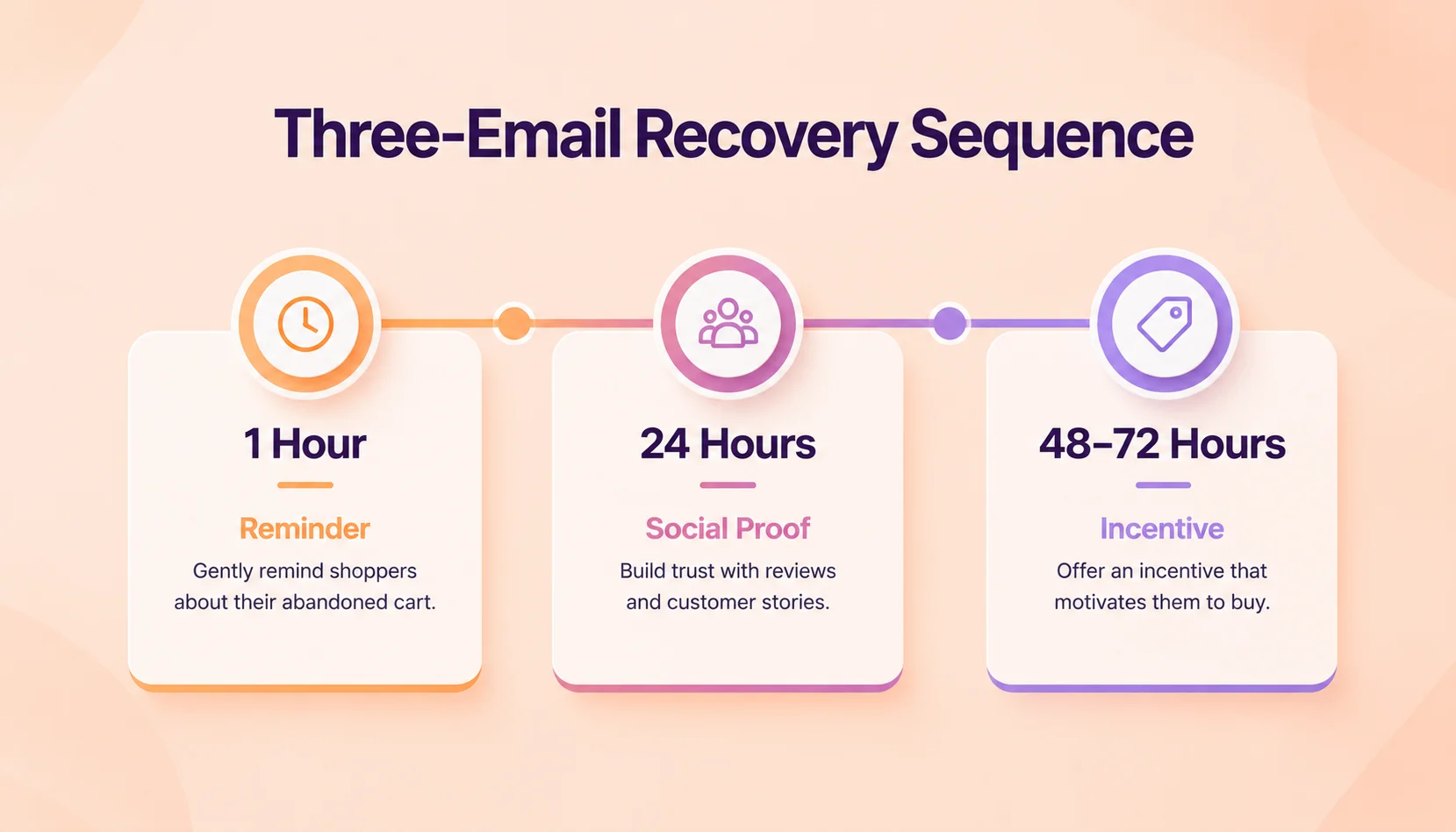
1. 1 Hour After Abandonment – The Gentle Reminder
No big deal, a friendly push. Display the exact product photos, a direct link back to the cart, and remind them that their items are saved. Use the subject line: You left something behind.
2. 24 Hours After Abandonment – Social Proof + Urgency
Include reviews, ratings, or “X people bought this today” indicators. If inventory is truly scarce, create a mild sense of scarcity. Suggested message: “Other shoppers are currently viewing these items.”
3. 48–72 Hours After Abandonment – The Incentive Close
Introduce incentives such as percentage discounts, free shipping, or loyalty rewards. Set a time limit on the offer (e.g., it expires in 2 hours) to create urgency to take it. The message copy: “Last chance: 10% off your cart”
Email Personalization Essentials
- Include the exact product name, image, and price from the abandoned cart, always
- Address the customer by their first name in the subject line and the greeting.
- Segment customers by cart value, and high-value carts may warrant a phone call or a larger incentive.
- Try different subject lines, send times, and CTA button colors to boost your open and click-through rates.
Don’t Over-Discount
Offering discounts in the first recovery email can train shoppers to abandon carts intentionally while waiting for incentives. Offer incentives for the third message when you’ve ruled out non-discount options.
SMS Cart Recovery: Reaching Shoppers Where They Are
SMS cart recovery is the fastest-growing recovery channel, and there’s a reason for that. SMS messages have a 98% open rate and are typically read within 3 minutes of delivery. The sense of urgency makes SMS the perfect tool for sending recovery nudges.
SMS Best Practices
- Limit it to under 160 characters with 1 message, 1 action, 1 link.
Opt-in: Always send SMS with permission (TCPA/GDPR compliance)
Send SMS messages within the optimal recovery window of 30 minutes to two hours after abandonment.
Personalize with product names such as “Your Nike Air Max 90s are waiting for you” beats “You left something in your cart”
Always include an opt-out option, such as “Reply STOP to unsubscribe.
SMS Recovery Message Examples
| Message Type | Example SMS |
|---|---|
| Simple Reminder | Hi [Name], your shopping cart has been preserved! Complete your order here: [Link]. Reply STOP to opt out. |
| Urgency / Scarcity | Only 2 left in stock, [Name]! Don’t wait, complete your order before it sells out: [Link] |
| Incentive | Hey [Name]! Use code SAVE10 to get 10% off your purchase. This offer is valid until midnight: [Link] |
The power of SMS recovery for multi-vendor marketplace platforms lies in the fact that it does not compete with inboxes. A direct message appearing on the lock screen cannot be ignored.
Retargeting for Cart Abandonment: Paid Recovery at Scale
Retargeting for cart abandonment re-engages visitors who have left your website with paid ads on Google, Meta (Facebook/Instagram), and other platforms. Unlike email or SMS, retargeting does not require direct contact information, provided shoppers have accepted cookies.
How Cart Abandonment Retargeting Works?
- One of your customers walks into your store and puts things in his cart.
- When shoppers leave without purchasing, the system adds them to a custom retargeting audience.
- In a few hours, their exact cart items can be seen in dynamic ads on Facebook, Instagram, or Google Display Network.
- The ad is clicked, and the shopper returns to a pre-filled cart, saving them the hassle.
Retargeting Ad Types for eCommerce
- Dynamic Product Ads (DPA): Automatically retrieve product images, names, and prices from your catalog feed for hyper-personalized ads
- Google Shopping Remarketing: Target the browse cart items that were left on your website in Google Shopping ads when they search for similar products
- YouTube Retargeting: Leverage video to win over cart abandoners with high value.
- Cross-channel sequencing: Begin with a brand awareness video ad, then offer a product-specific carousel, and finally an incentive ad.
Retargeted traffic usually improves all conversions by 30-50%, making it a necessary addition to any ecommerce conversion rate optimization strategy.
Channel Comparison: Email vs SMS vs Retargeting
Email excels at nurturing customer relationships with personalized, content-rich communication, while SMS delivers immediate engagement and high open rates for time-sensitive messages. Retargeting reinforces brand recall by re-engaging visitors across digital channels, helping convert interested prospects into customers.
| Factor | SMS | Retargeting | |
|---|---|---|---|
| Requires contact info? | Phone number | Cookie-based | |
| Opt-in required? | Yes | Yes (strict) | Implicit (cookie consent) |
| Cost | Low | Low–Medium | Medium–High (CPM) |
| Best for | Detailed messaging, sequences | Urgent nudges | Anonymous visitors |
| Rich media? | Yes (images, product cards) | Limited | Yes (dynamic visuals) |
| Personalization depth | High | Medium | High (dynamic ads) |
The winning formula is not to use one channel, but to use all three in your ecommerce automation process. Email begins the discussion, SMS drives urgency, and retargeting maintains brand presence throughout the web.
Best Practices to Reduce Cart Abandonment Rate
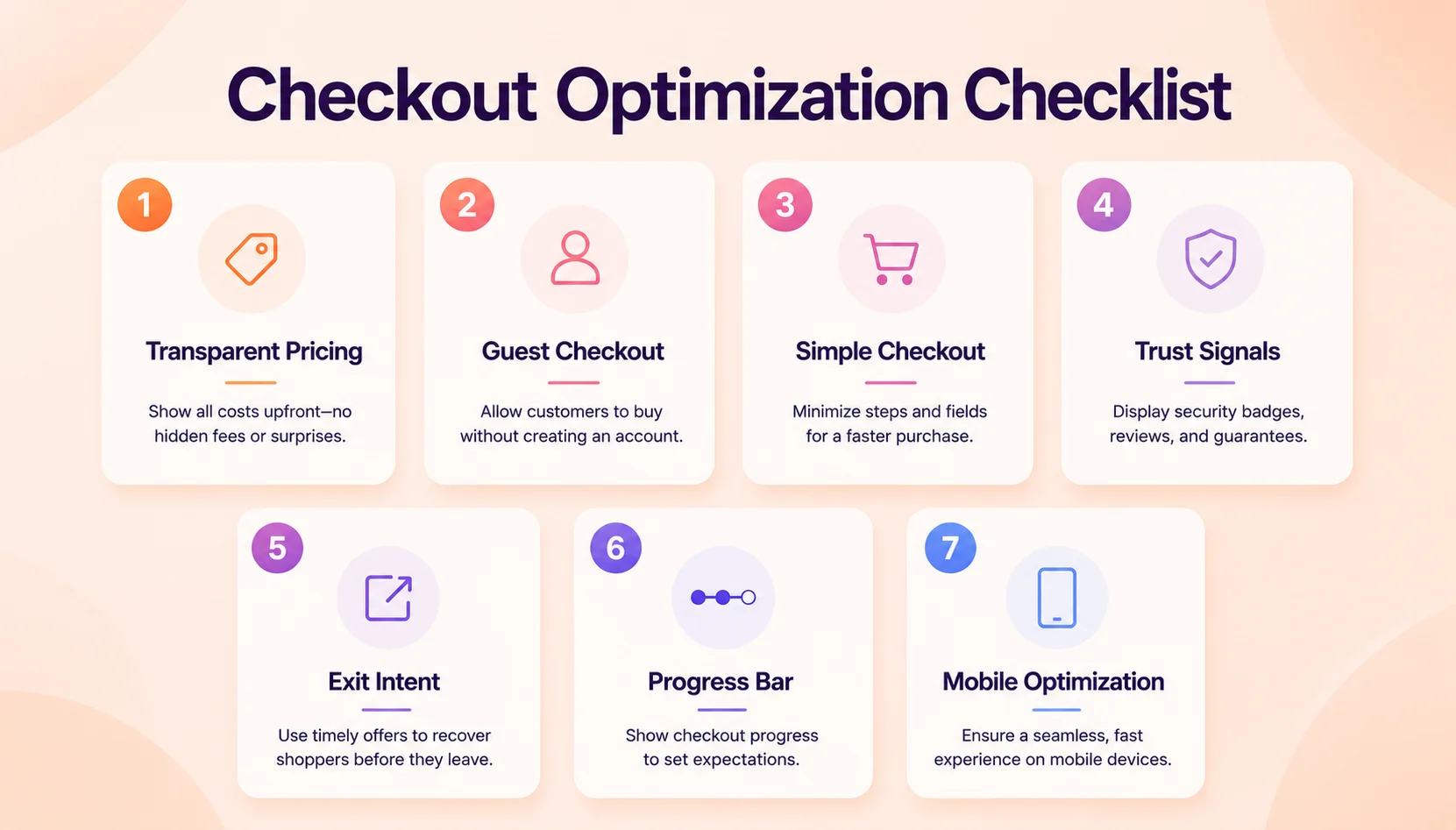
Recovery is reactive. Prevention is proactive. Ideal eCommerce stores operate on both sides of the equation. Here are some ways to lower the cart abandonment rate before it occurs:
- Display total cost early: Ship costs and taxes should be shown on the product page, not at checkout. Don’t require guests to sign up to check out, as it will reduce conversions.
- Offer guest checkout: Mandatory registration kills conversions. Allow checkout without account creation
- Simplify your checkout funnel: 3 steps or fewer to checkout, abandonment rate rises by ~10% for every step added.
- Add trust signals: Include trust signals, such as SSL badges, payment logos, and customer reviews, near the checkout CTA, which decreases hesitation
- Implement exit-intent pop-ups: These pop-ups appear when a customer tries to close the browser window in the browser.
- Display progress indicators: a checkout progress bar helps to minimize drop-offs as consumers have a sense of completion
- Optimize for mobile: more than 60% of cart abandonment occurs on mobile devices, and test them across all screen sizes.
These checkout optimizations directly contribute to the health of your overall ecommerce sales funnel. Optimizing conversion opportunities within the existing sales funnel is typically more cost-effective than increasing acquisition spend.
Which are the Top Cart Recovery Software you should consider?
The right kind of cart recovery software needs to be integrated with your eCommerce platform, support multi-channel automation, and offer in-depth analytics. Let’s get the overview first:
| Tool | Best For | Key Features |
|---|---|---|
| Klaviyo | Email + SMS omnichannel | Advanced segmentation, flow automation, and product content features for dynamic personalization |
| Drip | eCommerce-focused email | Visual workflow builder, behavior-based triggers, and revenue attribution |
| Twilio | Developer-built SMS flows | SMS + WhatsApp API, real-time triggers, and scalable infrastructure |
| Omnisend | SMB omnichannel | Pre-built workflows, unified email + SMS + push notifications |
| Google Ads | Search & Display retargeting | Dynamic remarketing is designed for shopping ads and intent-based targeting |
| Meta Ads | Social retargeting | Dynamic Product Ads, Lookalike Audiences, and Instagram integration |
| SpxCommerce | Marketplace recovery | AI-driven personalization, automation, and multi-vendor support |
Marketplace operators with intricate multi-vendor ecosystems will care about native integration. When friction is added to BOL, built-in recovery automation, such as SpxCommerce, will ensure the entire buyer journey remains coherent and measurable as part of your ecommerce marketing strategies.
Conclusion
Abandoned cart recovery is now a business necessity for every eCommerce organization. If you don’t convert that cart, the investment you’ve already made in traffic, product development, and customer service will go down the drain. Losing 10-15% of those transactions is enough to start to change your revenue trajectory for good.
The best recovery strategy is a combination of a structured email sequence to abandon carts, regular SMS cart recovery, and persistent retargeting using cart abandonment data, all in one voice and driven by behavioral data. Proactive checkout optimization to prevent customer abandonment in the first place is another tool added to your arsenal for a truly airtight conversion rate optimization system.
If you’re a marketplace operator who wants to do all of this and not assemble 5 different tools, you’ll want to get the help of SpxCommerce, an AI-powered tool built for scale. Whether you are looking for behavioral triggers or attribution dashboards, the platform covers the entire recovery lifecycle, allowing you to focus on marketplace development rather than integrations.