The environment in ecommerce is changing at rates that are outpacing most of the entrepreneurs. It takes a lot of capital, time, and know-how to build a brand completely, manufacturing products, creating software, or providing services. That’s where white labeling enters the picture as a strategic shortcut that’s reshaping how businesses scale.
White labeling has emerged as a huge global market opportunity, enabling companies to offer quality products and services under their own brand without the headaches of production. Whether you’re a startup founder looking to launch quickly or an established business expanding your product line, understanding white labeling could be the competitive advantage you’ve been searching for.
In this comprehensive guide, we’ll explore what white labeling truly means, how it differs from private labeling, the tangible benefits it offers, and practical examples across industries. You will find out what white label solutions are the most popular, how to select the right supplier, and leave with 10 practical business ideas that can be implemented in the present day. By the end, you’ll have a complete roadmap for integrating white labeling into your business strategy.
What is white labeling?
White labeling is a business arrangement in which one company manufactures a product or develops a service, and another company rebrands and sells it under its own name. Imagine it as the purchase of a blank-canvas product that can be customized with your brand name, logo, packaging, colors, and marketing message.
The name came about after vinyl records were delivered to DJs in their unbranded form so they could be labeled by whoever wanted to distribute them. Today, white labeling spans nearly every industry imaginable, from software to skincare, food products to financial services.
Here’s what makes white labeling powerful: you can skip the expensive, time-consuming product development phase. You do not have to spend months or years designing something; rather, collaborate with an existing manufacturer or service provider who has already mastered their product or service. You just do your branding and bring it to the market. A recent market research shows that about 65% of consumers have recently bought private white-label products in the last year, and most of them are even unaware of it.
In this blog, you will learn about the major retailers and brands you interact with daily, and leverage white labeling strategies that they use behind the scenes.
White labeling vs private labeling: Is there a difference?
While these terms are often used interchangeably, there are subtle but important distinctions worth understanding:
| Aspect | White Labeling | Private Labeling |
| Product Customization | Minimal, typically just branding and packaging | Extensive can modify formulations, features, and specifications |
| Exclusivity | Same product sold to multiple brands | Often exclusive to one retailer or brand |
| Development Time | Immediate ready-made products | Longer requires product modifications |
| Investment Required | Lower R&D costs | Higher involves product development costs |
| Control Over Product | Limited control over features | Greater control over product attributes |
| Minimum Order Quantities | Usually lower | Typically higher |
| Example | Generic software rebranded by multiple resellers | Store-brand groceries at major retailers |
The choice between white label products and private label depends on your business goals. Need speed to market with minimal investment? White labeling is your answer. Want something unique that competitors can’t replicate? Private labeling offers more differentiation.
What are the benefits of white labeling?
White labeling isn’t just a shortcut; it’s a strategic business model with compelling advantages:
-
Faster Market Entry
The usual way of developing a product may take 12-18 months between concept and launch. Sell in weeks with white label products. This faster pace is vital in high-paced markets where the first one is the best.
-
Lightened Capital Requirements
Bypass the heavy infrastructure purchases. None of them have manufacturing plant, none have research teams, and none of them has a prototype failure. You are just lending the skill and manufacturing power of another person.
-
Focus on Your Core Strengths
If your superpower is marketing, customer experience, or distribution, white labeling lets you concentrate there. It is best to leave the product creation to the professionals as you play your best role.
-
Lower Risk Profile
In cases where you have existing products but not experimental innovations, you are cutting down on the market risk extremely. Demand has already checked by someone, and the production kinks have been determined.
-
Scalability and not Complexity
You do not need similar increases in complexity of operations to grow your white label business. Your supplier takes care of the scale of production as you concentrate on customer acquisition.
-
Opportunities in Brand Building
Contrary to that, white label services enable the establishment of a solid brand. Customers are interested in the experience, service, and values that you provide- who produced the product is not important.
Common types of white labeling
White labeling manifests across diverse business categories:
-
White Label Software
SaaS tools, mobile applications, and business applications that can be repackaged and resold. Marketing automation applications, CRM systems, and project management applications often run on white label models. The white label software market in the world is set to be a $225 billion market by 2027.
-
White Label in Ecommerce
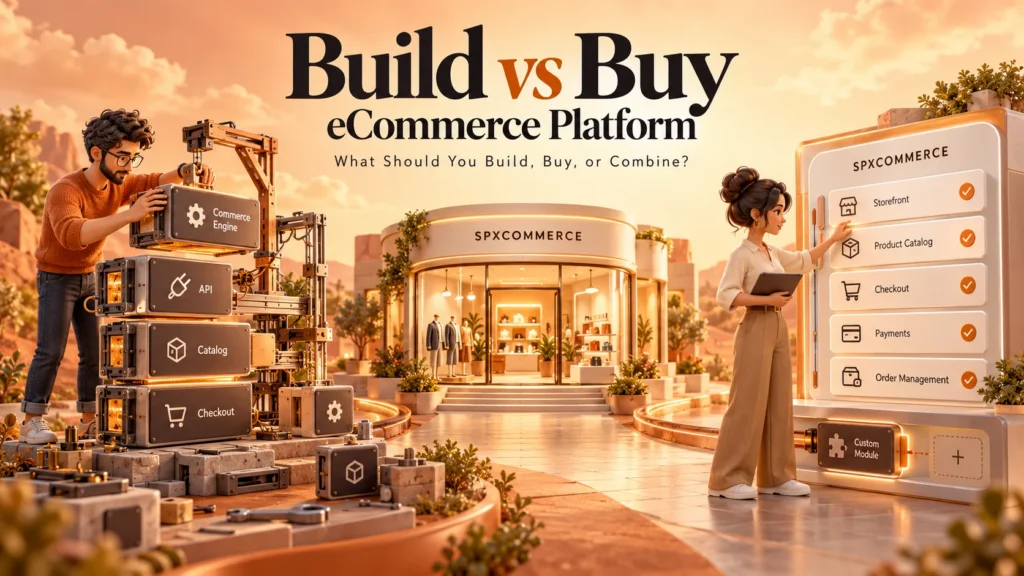
Full-blown online store solution, in which the infrastructure is taken care of by companies such as SPXCommerce, and you handle the brand. This comprises all the way down to shopping cart technology, payment processing, and inventory.
-
White Label Manufacturing
Physical goods that include beauty and cosmetics, supplements and vitamins, food and beverages, electronics and accessories, and clothing and fashion goods.
-
White Label Services
Marketing agencies that provide white label services of SEO, social media, web design and development, content creation, and consulting.
-
White Label Dropshipping
One where you sell merchandise under your brand, but the supplier is responsible for inventory, packaging, and delivering these items directly to your customers.
Where can you find white labeling products
White labeling is everywhere once you know where to look:
| Industry | Examples |
| Retail Giants | Store brands (e.g., supermarkets with their private-label products) |
| Financial Services | Credit cards, investment solutions, and banking services are rebranded by banks |
| Travel Industry | Hotel reservation systems, travel insurance, and booking platforms used by smaller agencies |
| Software and Technology | Website builders, analytics tools, and email marketing platforms are used by marketing firms |
| Health and Wellness | Supplement industry (generic formulations rebranded by various brands) |
How to get started with white labeling Business
To open a white label business, one needs to plan:
Step 1: Identify Your Niche
Begin with what you are already good at, with whom you have connections, or whom you love. The better the knowledge you have of your target market, the better you will be at succeeding.
Step 2: Research Market Demand
Test-drive the people to make sure they need what you are about to sell. Research by using keyword research tools, competitor analysis, and customer surveys to understand interest.
Step 3: Find Reliable Suppliers
This is the make-or-break decision. Find manufacturers that have a good track record, have quality certifications, communicate well, and provide favorable terms.
Step 4: Evaluate Sample Products
Do not commit to anything without trying it. Take order samples to judge on quality, packaging and the product conformity with your brand standards.
Step 5: Define Your Brand Identity
Your brand is what makes you stand out, even with white label products. Invest in designing strong messaging, visual identity, and design of the customer experience.
Step 6: Set Up Your Sales Channels
You can either sell on your personal ecommerce platform, on platforms such as Amazon, or in retail collaborations, but in any case, you need to set your distribution strategy early.
Advantage of White labeling services
In addition to products, white labeling services have some more special advantages:
Service scaling is not the same as that of physical goods. As soon as an efficient service delivery system is in place, you can provide service to exponentially many clients without adding costs in equal measure. For agencies, white labeling enables offering comprehensive solutions without hiring specialized staff for every discipline.
Examples: SPXCommerce helps to create a fully branded and business website and offer full ecommerce infrastructure to its customers. Companies have the opportunity to develop enterprise-grade ecommerce marketplace platform under their name without developing complicated technology.
Of great interest is the recurring revenue potential. Most white label services are subscriber-based, which generates steady income monthly instead of being usually made through transactional sales.
Factors to Consider While Choosing a White Labeling Supplier
The success of your supplier relationship lies in your relationship. Prioritize these factors:
- Quality Consistency: Ask to record quality control procedures. Poor uniformity of products hurts your brand and not theirs.
- Production Capacity: Are they able to manage your growth? The worst thing about it is that when you manage to do well in the market, you may find out that your supplier is not able to match the demand.
- Minimum Order Requirements: Friendly to start, suppliers have lower minimums, so you can experiment with markets without huge initial stocking costs.
- Customization Options: A little differentiation is helpful, even with the white label products. Find suppliers that permit variations in packaging, minor changes in the product, or even the option of bundling.
- Communication and Support: You require not only a vendor, but a partner. Problem-solving and responsive communication assistance are priceless in times of problems.
- Certifications Compliance: Suppliers should have industry-relevant certifications (FDA, ISO, organic, fair trade, etc.).
7 White labeling business ideas you can start today
Ready to launch? With these proven opportunities in mind:
| Opportunity | Description | Industry | Potential |
| Health and Beauty Supplements | Co-create with licensed manufacturers to create your own branded line of wellness products. | Health & Wellness | High demand for personalized wellness |
| Organic Skincare Products | White-label manufacturing for natural skincare products, capitalizing on the growing organic trend. | Beauty & Skincare | Strong market growth in organic beauty |
| Pet Products and Accessories | White-label opportunities in the pet industry with an ever-growing market value. | Pet Industry | $136 billion market potential |
| White Label Software Solutions | Rebrand project management, CRM, or marketing automation software. | Technology/Software | Software as a service (SaaS) boom |
| Ecommerce Platform Reselling | Resell online store solutions as a white label partner. | Ecommerce | Growing online retail sector |
| Digital Marketing Agency Services | Package white-label SEO, content, and social media management services. | Marketing & Advertising | High demand for outsourced marketing |
| Green Home Products | Eco-friendly white-label products like bamboo, cleaning products, and reusable containers. | Sustainability/Eco | Strong eco-friendly consumer demand |
All these ideas can be initiated at a relatively low cost compared to conventional product development.
Ready to start your business White labeling strategy?
White labeling offers an accessible path to entrepreneurship by allowing you to build a brand without the barriers of traditional production. The key to success lies in strategically selecting a niche, partnering with the right suppliers, and focusing on creating a standout customer experience.
It’s not just about slapping your logo on products; it’s about curating offerings that resonate with your target audience. The first step is identifying what unique value you can bring to the market. Once you know that, white labeling provides the infrastructure to bring your vision to life.
Start your journey with Spxcommerce, your trusted partner in building a successful white-label brand.