Your customers look at your Instagram shop, add items to their cart on mobile, and show up at your store expecting to be taken right up to the till. But the problem is, you have “in stock” in your inventory, but have “sold out” at your store.
This fragmented reality is the #1 growth killer for modern retailers. Friction is caused by disconnected systems, and friction equals lost conversions, lost loyalty, and lost revenue. It’s not just about having a better omnichannel ecommerce strategy; it’s about transforming to a unified commerce strategy, where each channel, touchpoint, and data source is one streamlined system.
In this guide, you’ll learn exactly what a unified commerce strategy is, why it’s better than the traditional omnichannel strategy, and a step-by-step structure for building it for your retail business, all with real tools, best practices, and architecture insights.
What is a Unified Commerce Strategy?
The strategy of bringing all commerce channels together and running them on a single commerce platform that uses the same data layer. Unlike isolated systems where each channel functions independently, unified commerce treats each transaction, inventory item, and customer interaction as a living whole.
It’s similar to the notion of traditional retail tech stacks as separate islands with crappy ferries between them. The mainland is a single commerce platform: All is connected, data operates in real-time, and your customer’s experience is seamless across the various ‘islands’ they visit.
Unified Commerce vs Omnichannel: Know What Sets Them Apart?
There is a lot of miscommunication out there about unified commerce and omnichannel commerce. They’re similar but different in architecture. Understanding the gap is a crucial step before finalizing your technology stack. For a more detailed comparison, check out the blog posts about omnichannel vs multichannel retail.
| Dimension | Omnichannel | Unified Commerce |
|---|---|---|
| Architecture | Siloed systems connected through APIs and integrations | Single platform with a unified data layer |
| Data Sync | Near real-time synchronization, with potential latency between systems | True real-time data consistency across all channels |
| Inventory Management | Inventory data is synced across separate systems as needed | One centralized inventory view across all channels at all times |
| Customer Profile | Customer data is stitched together across platforms, often requiring a CDP | Native, unified customer profile within a single system |
| Complexity | High integration and maintenance requirements | Lower operational complexity after implementation |
| Best For | Brands with existing technology investments and established tech stacks | Brands building for scale, re-platforming, or seeking a unified foundation from the start |
In short, omnichannel is a coordination approach. Unified commerce is an architectural approach. The former is used when the two are connected, and the latter is used to build a single system from scratch.
What are the Key Components of a Unified Commerce Platform?
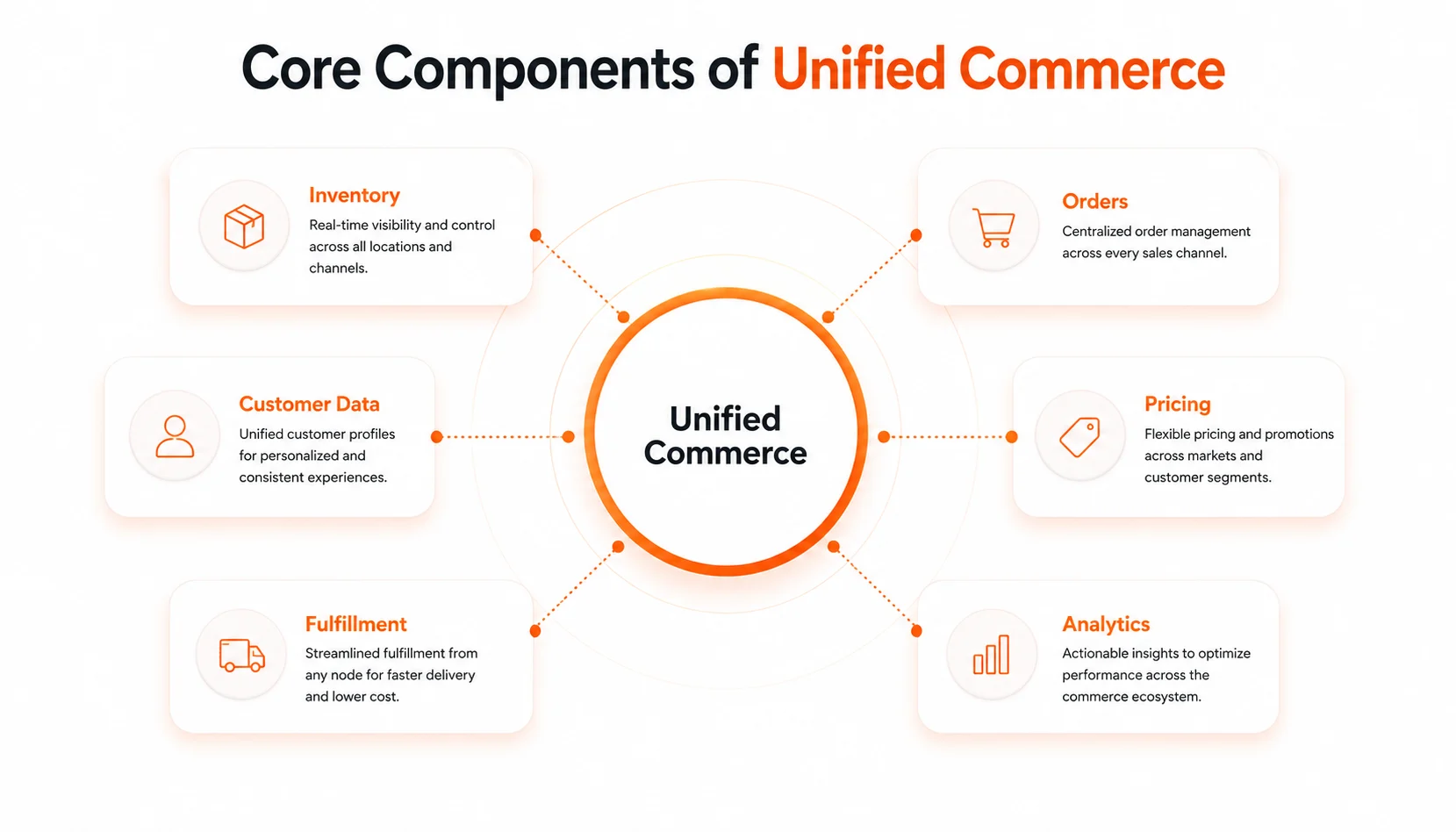
There are six key layers that make up a robust unified commerce platform: centralized data layer, unified order management, real-time inventory engine, unified customer profile, cross-channel commerce engine, and open API & integration layer. Each layer must be native, not bolted on, for true unification to work
How to Build Your Unified Commerce Strategy?
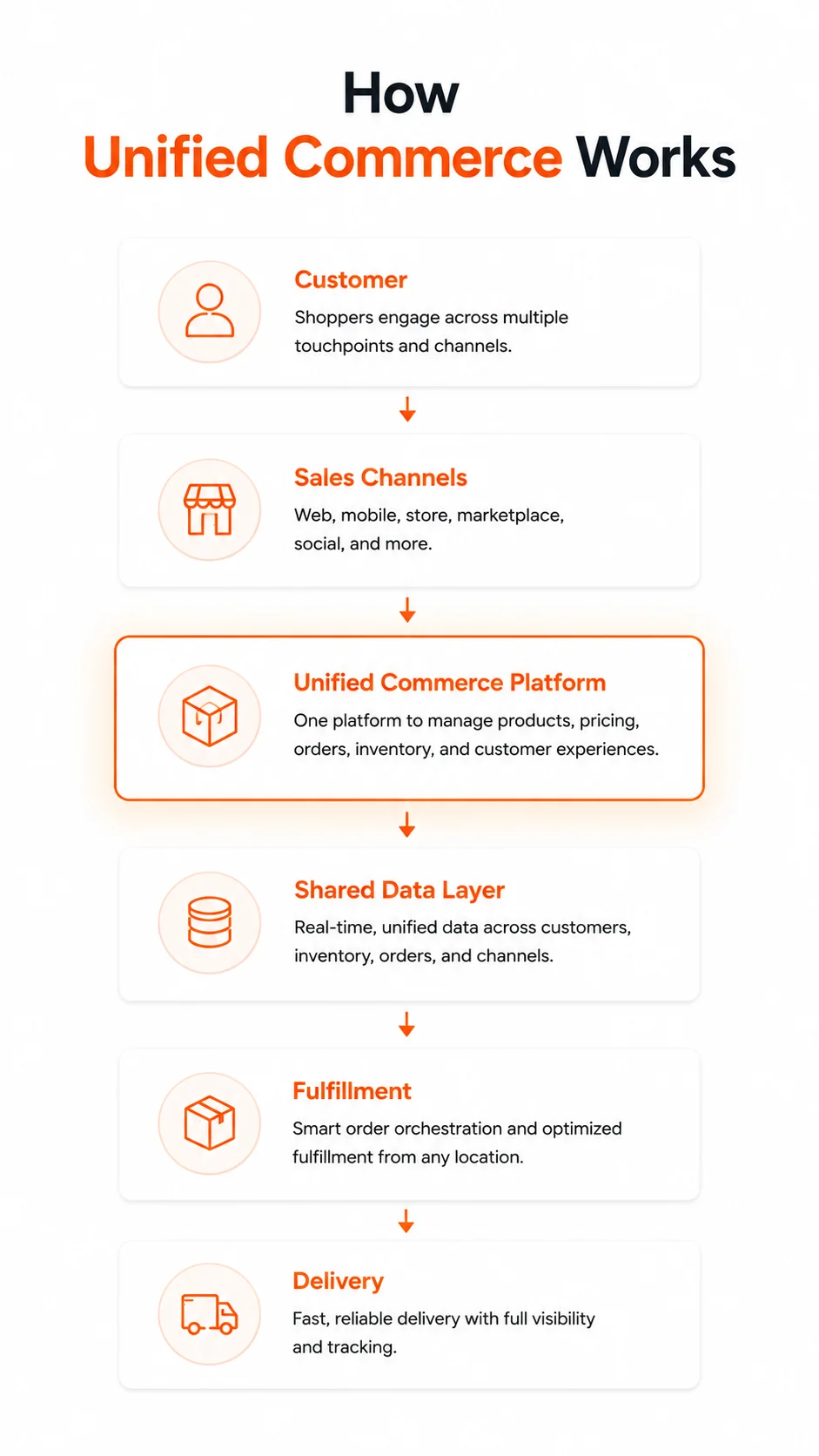
Creating a unified commerce strategy isn’t something you can do over the weekend, and it’s a gradual evolution. A reliable model that works for mid-sized stores up to enterprise stores.
1. Audit Your Current Tech Stack & Data Gaps
Identify all systems containing customer, inventory, or order information. Determine points of sync latency, data duplication, and integration failures. With this audit, you’ll know exactly where friction is occurring at each step of the customer journey.
2. Determine Your Channel Architecture.
Identify all sales and engagement channels: D2C website, mobile app, marketplaces (Amazon, Flipkart), social shops (Instagram, WhatsApp), physical stores, and B2B portals. All of these needs need to be addressed from the outset of your unified platform.
3. Select a Single Commerce Platform
Select a platform that supports multi-channel, multi-store, and multi-currency operations natively. It’s important to have a headless, API-first approach for long-term flexibility. Assess platforms in relation to your channel, not just your needs.
4. Unify Inventory & Order Management First
This is the most important action. Real-time inventory across all channels eliminates the most common customer complaint, “it said in stock, but it wasn’t.” Unifying OMS enables advanced fulfillment capabilities such as BOPIS, ship-from-store, and endless aisle.
5. Create the Unified Customer Profile.
Cross-Channel Stitching via email, phone, and loyalty ID. All purchases, browsing, returns, and support interactions should be tied to a single profile, so that personalization occurs at every touchpoint.
6. Apply Consistent Commerce Logic
All pricing, promotions, tax rules, and cart logic need to be centrally managed and applied consistently across all channels. Any discount applied to your app must be applied automatically at the POS and not manually.
7. Test, Measure & Optimize by Channel
Monitor channel level metrics (conversion, AOV, return rate) and unified metrics (CLV, cross-channel attribution). Iteratively optimize the unified retail experience using A/B testing.
How BOPIS Strategy is A Cornerstone of Unified Commerce?
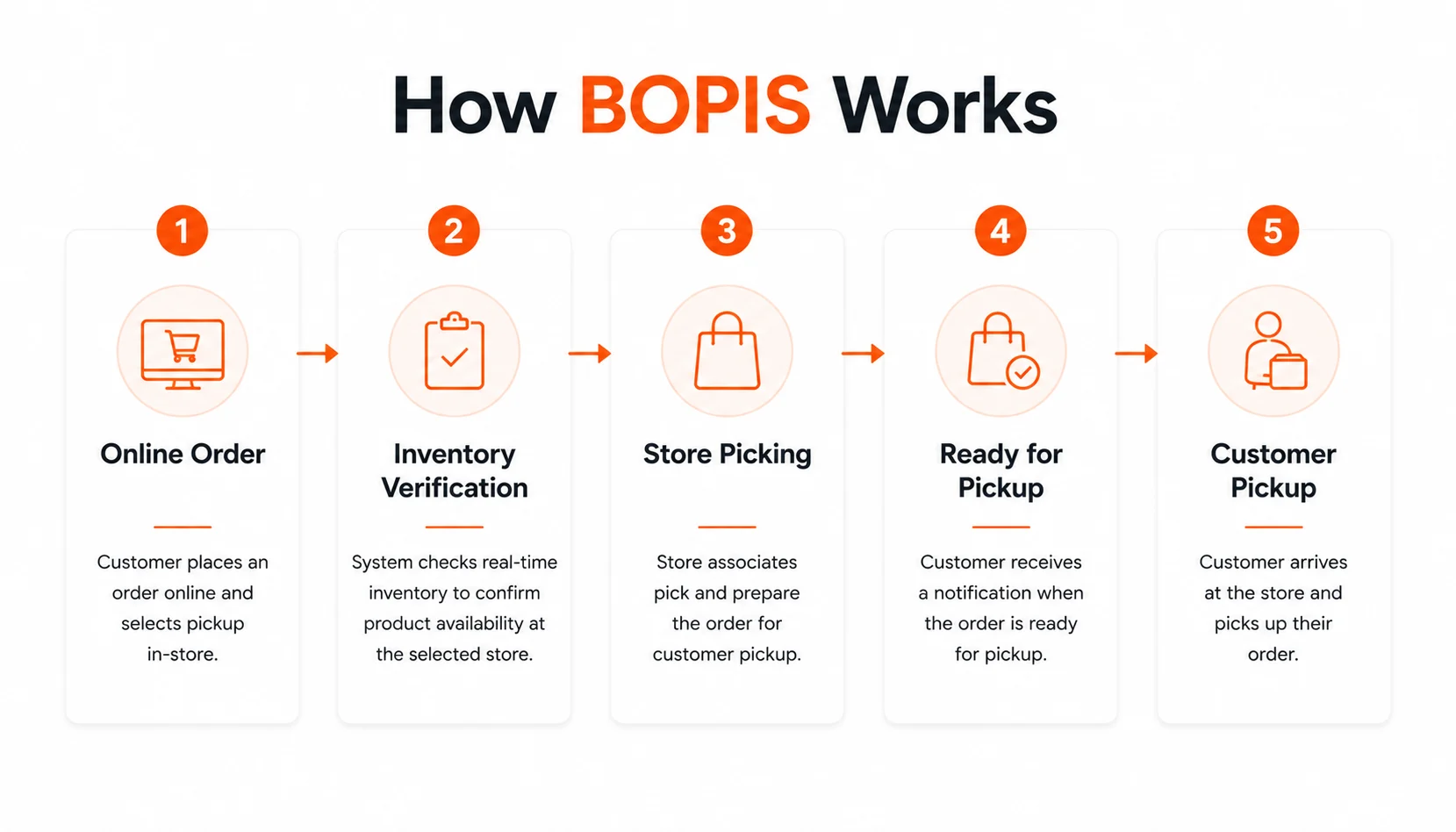
One of the most effective, one of the most challenging results of a well-developed unified commerce strategy is BOPIS, Buy Online, Pick Up In-Store. A successful BOPIS helps drive store traffic, reduce shipping costs, and significantly improve the fulfillment process.
Why BOPIS Requires True Unification?
The epic fails when the stock is outdated. If your online store has “available for pickup” but your in-store system has sold that unit 20 minutes prior, you’ve got a customer service problem. The following are essential for a strong BOPIS strategy:
- Infinite synchronization of SKU level and location inventory.
- Redirecting customers to the store at checkout when they check out online, without delay.
- Associate picks and confirms orders through store-level dashboards.
- When the order is fulfilled, a notification workflow (SMS/email) is launched to notify the customer.
- Online returns are seamlessly processed in-store, with 100% reconciliation.
What are the Tools and Technologies that Power Unified Commerce?
Your vision of unified commerce can be a reality or a multi-year integration effort, depending on your technology stack. Let’s take a look at a list of the core technology categories and what to check out.
| Layer | Function | Key Capabilities to Demand |
|---|---|---|
| Commerce Platform | Central hub for product, pricing, cart, and checkout | API-first architecture, headless commerce, multi-store support, multi-currency support |
| Order Management System (OMS) | Routes and manages orders across fulfillment nodes | BOPIS (Buy Online, Pick Up In Store), ship-from-store, split shipments, SLA tracking |
| Inventory Management | Real-time stock visibility across locations | Sub-second inventory synchronization, multi-location support, safety stock logic |
| Customer Data Platform (CDP) | Unified customer identity and behavior data | Identity resolution, customer segmentation, and real-time activation |
| POS System | In-store transaction processing | Native integration with central OMS, unified customer profile integration |
| Marketplace Integration | Connects to marketplaces such as Amazon, Flipkart, and Nykaa | Centralized catalog synchronization, unified order intake, and processing |
Best Practices for a Seamless Unified Retail Experience
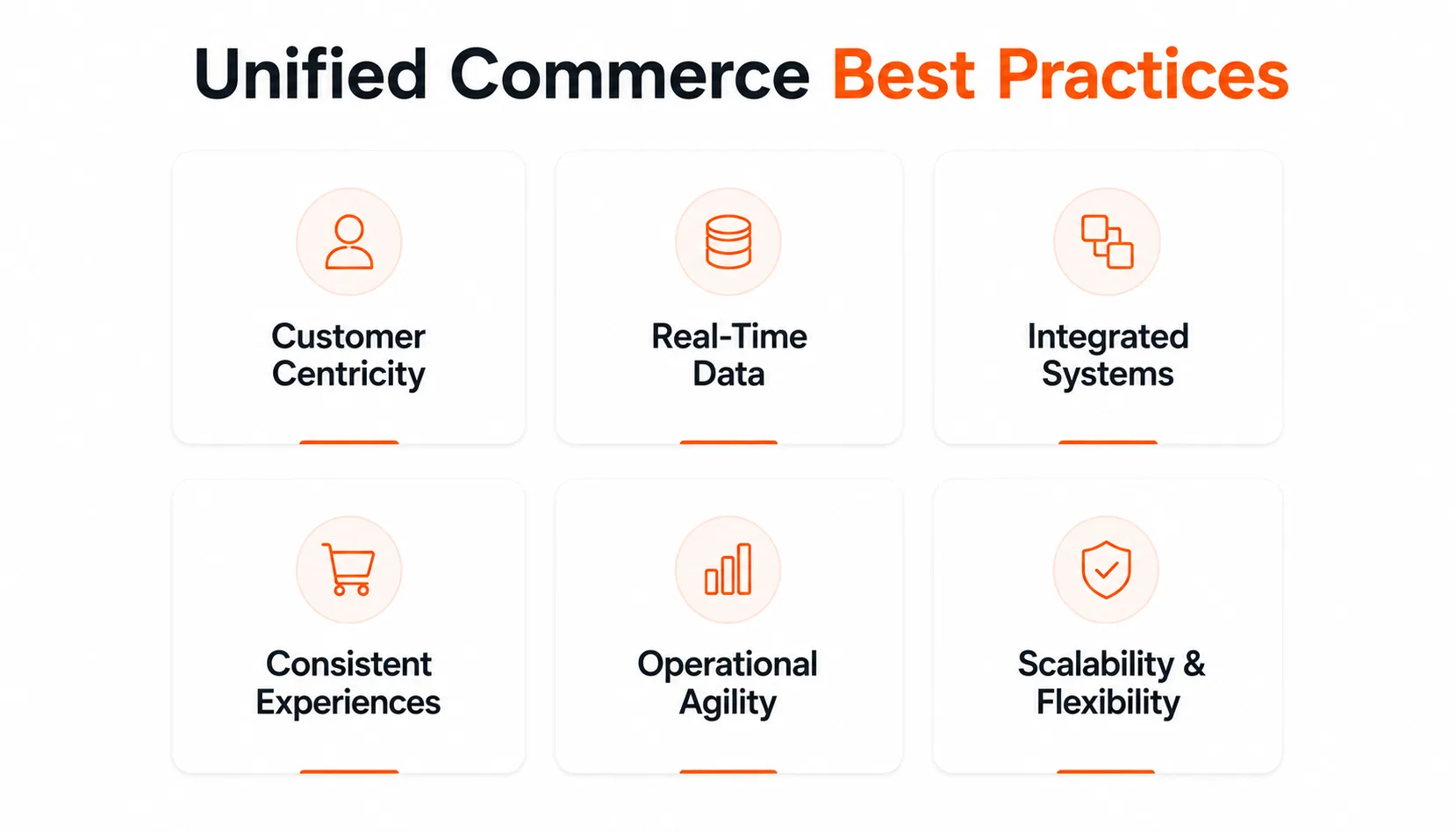
However, technology alone does not ensure a consistent retail experience; it’s all about execution discipline. These best practices set leaders apart from laggards.
1. Start with data governance.
There must be a definition of ownership for each data entity (product, customer, order) before tools are chosen. Even the best platform becomes chaotic without governance.
2. Make an investment in change management.
However, it is crucial that store associates, warehouse personnel, and digital teams understand and adopt unified workflows. Training and incentives are as important as software.
3. Adopt a headless front-end architecture
Separating storefront from back-end logic provides the speed to launch new channels and experiences without rebuilding the commerce foundation. See our eCommerce Architecture deep dive for more.
4. Enable cross-channel returns.
Consumers want to return items they buy online to a physical store and vice versa. This is a loyalty driver and operationally complex due to the lack of a unified OMS.
5. Personalize at scale
Make sure the unified customer profile is used when making recommendations, pricing, and promotions to your customers, not only in email, but in all channels. Develop and evolve your omnichannel marketing strategy on this basis.
6. Monitor unified KPIs
CLV, cross-channel conversion, and fulfillment SLA compliance are more meaningful than channel-specific vanity metrics.
How to Choose the Right Single Commerce Platform?
Your unified commerce tech roadmap comes down to one decision: which commerce platform to choose? Assess platforms based on 5 criteria:
- Native Channel Support: Does it support your existing and targeted channels, web, mobile, marketplace, social, and in-store POS?
- Architecture: Is it API-first and headless, or is it merely marketed as such? Don’t take demos, ask for technical documentation.
- Scalability: Can it cope with your peak traffic during a sale or season? Request SLA guarantees and load test case studies.
- Marketplace Capabilities: If your business is a multi-vendor or marketplace, you should have a platform with seller onboarding, commission management, and catalog syndication features that are not found in a traditional ecommerce platform.
- Total Cost of Ownership: Consider license fees and integration costs, customization requirements, and maintenance costs, not just the initial price tag.
Why Choose SpxCommerce for Your Unified Commerce?
SpxCommerce is designed for retailers and brands that require more than just ecommerce they need a platform that enables them to create marketplaces, manage multiple stores, and personalize with AI.
As an omnichannel ecommerce platform, we offer native tools that help you unite your channels without cumbersome, time-consuming integrations with traditional stacks.
It is designed from the ground up to achieve true data unification, whether you are operating one brand across several regions or establishing a multi-vendor marketplace.
Using our multi-store ecommerce platform, you can run separate stores with different branding, pricing, and catalogs, while sharing a single back-end for inventory, orders, and customer information. This is the “operational backbone” that makes BOPIS strategy, cross-border expansion, and B2B/B2C hybrid commerce operationally feasible.
We analyze real-time customer behavior and purchase history to provide customized product suggestions, flexible pricing, and inventory forecasts across all channels at once.
When considering your unified commerce architecture and how you want it to look, a good starting point would be to explore how companies such as SpxCommerce have managed the unified commerce customer journey end-to-end.
Conclusion
Unified commerce is no longer a competitive differentiator, and it’s the expected baseline of modern retail. Customers seamlessly switch between channels, and this should be reflected in their journey experience as well. The antithesis of loyalty and growth is fragmented systems, siloed data, and inconsistent inventory.
The way forward is obvious: just spend the money on a single commerce platform that integrates your data, channels, and operations at the architectural level. Adopt BOPIS and cross-channel fulfillment strategies, and transform physical stores into fulfillment assets.
Create a customer “360 profile” to drive personalization across all interactions. Select technology partners who recognize that marketplace, multi-store, and AI features are not “niceties,” but are part of the strategy.
It’s not about unified commerce, but about an operating model. Strike where you stand, join what you can, and work towards creating a unified retail experience that your customers will accept and return to.